The Hidden Benefits of Short-Term Rentals for Business Travelers (Most People Miss This)
Here is a question worth sitting with for a moment. If you stripped away the habit of booking hotels for business travel and genuinely evaluated your accommodation options from scratch, based purely on what supports your performance, your wellbeing, your budget, and your quality of life on the road, would you still arrive at the hotel as your answer?
For a growing number of business travellers, the honest answer to that question is no. Not because hotels are bad. They are not. They serve a genuine purpose and do certain things well. But when you examine them honestly against the full range of what a working professional actually needs from their accommodation, particularly on trips of two nights or more, the gaps become increasingly difficult to ignore.
What is filling those gaps, and doing so with growing confidence and consistency, is the short-term rental. Specifically, the professionally managed serviced apartment that combines the independence and space of a proper home with the reliability and support of a professionally operated service. And the benefits this type of accommodation delivers to business travellers go significantly deeper than most people realise before they try it.
This is a guide about the hidden benefits. Not the obvious ones that most articles cover, the kitchen, the extra space, the cost saving. Those matter, and we will touch on them. But this guide goes further, into the less-discussed, less-visible advantages that experienced business travellers have discovered through direct experience and that most people genuinely miss until they make the switch themselves.
If you travel for work and you have not seriously explored short-term rentals as your default accommodation option, what follows might genuinely change how you think about every future trip.
1. Why Business Travellers Are Rethinking Their Accommodation Default
Business travel has changed substantially, and the change is not merely cosmetic. The nature of work itself has evolved in ways that make the traditional model of a hotel room as a business traveller's base increasingly poorly suited to the actual requirements of modern professional life.
The growth of remote and hybrid working has blurred the boundaries between travel and normal working life. Professionals are not just travelling to a city to attend meetings and return. They are working from wherever they happen to be, managing their full workload from their accommodation, taking calls across different time zones, collaborating digitally with colleagues who may be anywhere in the world, and trying to maintain a sustainable professional performance across trips that can last days, weeks, or months.
Against this backdrop, the limitations of a standard hotel room are not minor inconveniences. They are structural impediments to doing good work and staying well while doing it. A 25 square metre room with a narrow desk, shared building Wi-Fi, no kitchen, and no living space is not a functional working environment for a modern professional. It is a place to sleep between commitments, and even at that basic level, as we will explore, it often falls short.
The business travellers who have explored the short-term rental alternative with genuine openness have discovered not just a marginal improvement but a categorically different experience. One that supports their performance, preserves their routine, reduces their stress, and allows them to function at close to their normal capacity even when they are far from home.
Most of the benefits they have discovered are not the ones that appear in accommodation comparison articles. They are subtler, more personal, and in many cases more significant than the obvious advantages. They are the hidden benefits, and they are what this guide is about.
2. Hidden Benefit 1: The Performance Environment Advantage
The first hidden benefit is one that most business travellers only appreciate in retrospect, after they have experienced the difference. A short-term rental creates a performance environment in a way that a hotel room fundamentally cannot.
Consider what a performance environment actually requires. Space that is physically organised around the tasks you need to accomplish. A clear separation between work and rest zones so that your brain can switch between focused work mode and genuine recovery mode. Control over your immediate environment, including temperature, lighting, noise, and air quality. The absence of constant low-level environmental stressors that drain cognitive resources without your conscious awareness.
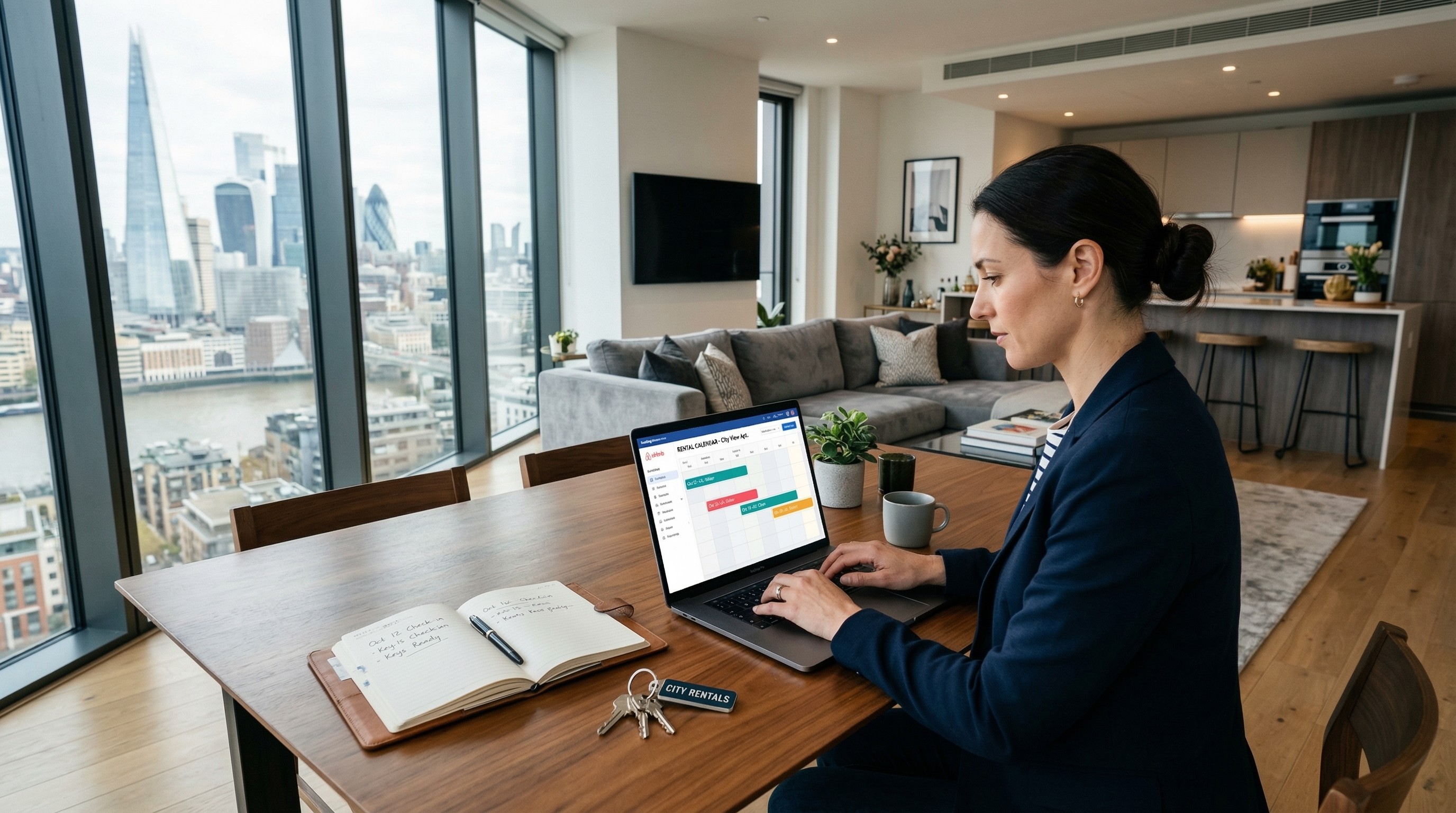
A quality serviced apartment provides all of this. You work at a proper desk in a dedicated area. You rest on a sofa in a living space that is physically separate from both your workspace and your sleeping area. You control the heating, the lighting, and the ventilation. You operate in a private, quiet environment that is not punctuated by the ambient noise of a hotel: corridor conversations, neighbouring room televisions, the distant sound of lifts and lobby activity.
Research in environmental psychology consistently demonstrates that the physical characteristics of a workspace significantly affect cognitive performance, decision quality, and sustained attention. Business travellers who understand this do not treat their accommodation as a neutral backdrop. They treat it as a tool for performance, and they choose accordingly.
The short-term rental wins this comparison not because it is luxurious but because it is organised around the requirements of real human functioning in a way that a hotel room, designed primarily for transient overnight occupation, simply is not.
3. Hidden Benefit 2: The Routine Preservation Effect
Ask any high-performing professional about the role of routine in their daily effectiveness and you will hear a consistent theme. Routine is not a constraint. It is infrastructure. The morning exercise, the specific breakfast, the particular coffee, the quiet thirty minutes before the day begins in earnest. These rituals are not indulgences. They are the scaffolding that holds a demanding professional life together.
Hotel stays erode this scaffolding systematically. Your morning routine is compressed by the absence of a kitchen, the limited space of a hotel bathroom shared with your partner, or the awkward geometry of a room that was not designed around your specific habits. Your evening wind-down routine is disrupted by the inability to sit somewhere other than the edge of a bed. Your exercise routine is challenged by gym facilities that open at 7am when you need to be in a meeting at 7:30am, or that close at 10pm when you finish work at 9:45pm.
A short-term rental preserves your routine in ways that go beyond mere convenience. You make your specific breakfast in your own time using your own ingredients. Your morning and evening routines unfold in a space that accommodates them rather than working against them. You have the physical and temporal flexibility to maintain the habits that underpin your daily performance.
This routine preservation effect compounds over the length of a trip. On a single overnight stay, the disruption is tolerable. On a five-day working visit, the accumulated erosion of routine begins to affect performance measurably. On a three-week project, the difference between a business traveller who has maintained their routine and one who has had it systematically disrupted by their accommodation environment becomes very visible.
Experienced business travellers have learned to protect their routines as a professional priority. Choosing accommodation that supports rather than disrupts those routines is a direct expression of that priority.
4. Hidden Benefit 3: The Cognitive Load Reduction
This is perhaps the most underappreciated hidden benefit of short-term rentals for business travellers, and it requires a moment of explanation to fully appreciate.
Cognitive load refers to the mental resources required to manage the demands placed on you at any given moment. Every decision, every piece of information to process, every logistical problem to solve draws on a finite pool of cognitive resource. When that resource is depleted by low-value demands, the quality of your high-value decision-making, your strategic thinking, your creative problem-solving, your interpersonal attentiveness, suffers.
Hotel living imposes a surprisingly high cognitive load on business travellers in ways they rarely consciously register. The constant decision-making around meals: where to eat, what to order, whether to use room service, how to manage the dietary preferences of colleagues you are entertaining. The management of laundry: when to send it, how to retrieve it, what the charges will be, what to do if something comes back damaged. The navigation of hotel systems: the key card that deactivates your room's power when you step out, the thermostat that requires a manual to understand, the television that cannot display your presentation.
None of these demands is individually significant. Collectively, over days and weeks, they represent a constant background drain on cognitive resources that would be better deployed on the actual work you are there to do.
A short-term rental eliminates most of this ambient cognitive load. The kitchen is straightforward. The washing machine is familiar. The thermostat is intuitive. The space is organised around normal human life rather than around the operational requirements of a large managed accommodation business. You spend less mental energy managing your accommodation and more on the work that actually matters.
The cognitive load reduction benefit of short-term rentals is real, measurable in its effects on professional performance, and almost entirely invisible until you have experienced life on both sides of the comparison.
5. Hidden Benefit 4: Genuine Neighbourhood Integration
Here is a benefit that almost never appears in accommodation comparison articles but that business travellers who have discovered it consistently cite as unexpectedly valuable. When you stay in a short-term rental in a real neighbourhood rather than a hotel in a commercial district, you experience the city you are visiting in a genuinely different and richer way.
Hotels cluster in specific, commercially optimised areas of a city. They are near transport hubs, conference centres, and the formal business district. This is convenient in a narrow sense, but it means that your experience of the city is essentially limited to its most transient and commercially managed spaces. You see the hotel lobby, the conference room, the expense-account restaurant, the taxi rank. You do not see how the city actually lives.
A short-term rental in a neighbourhood like Ancoats in Manchester, or Castlefield, or the Northern Quarter, places you inside the real texture of urban life. You discover the coffee shop that the locals use. You learn which streets are quieter in the morning and which come alive in the evening. You build a passing familiarity with the rhythm of the neighbourhood that gives you a genuine connection to the city you are visiting.
Why does this matter for a business traveller? Several reasons. Local knowledge and genuine cultural engagement make you a more interesting and informed conversationalist with clients, colleagues, and counterparts who are based in the city. They demonstrate that your relationship with a place goes beyond transactional visits to a conference room. And they provide genuine psychological nourishment in a way that the interchangeable environments of hotel living never can.
Business relationships are built on genuine connection. The business traveller who can talk about the extraordinary meal they had at a specific Ancoats restaurant, or the surprising beauty of a Castlefield canal-side evening, is more memorable and more engaging than the one whose city experience began and ended in a hotel lobby.
6. Hidden Benefit 5: The Sleep Quality Differential
Sleep is the foundation of every other form of professional performance. Cognitive function, emotional regulation, physical resilience, creative thinking, interpersonal effectiveness: all of these depend fundamentally on the quality and quantity of sleep. This is not a wellness platitude. It is one of the most robustly evidenced findings in performance science.
And yet, hotel rooms are not particularly well-designed for quality sleep. This is not an accusation but a structural observation. A hotel room is designed to serve a wide variety of guests with a wide variety of preferences. The mattress is a compromise. The pillow selection is a compromise. The climate control system is a building-wide system that responds slowly and imprecisely to individual room preferences. The acoustic environment reflects the presence of hundreds of other guests in the same building. The light sealing of the windows and curtains is variable at best.
A short-term rental in a residential building has none of these structural compromises. The acoustic environment is that of a residential building, significantly quieter than a hotel. The climate control is individual and immediately responsive. The bedroom is a bedroom, with no competing purposes and no ambient light from corridor gaps or window treatments designed for multiple guest preferences simultaneously.
The sleep quality differential that business travellers experience in short-term rentals compared to hotel rooms is one of the most consistently reported hidden benefits. Better sleep means sharper thinking, better decision-making, more effective interpersonal performance, and greater physical resilience on demanding working days. The business traveller who sleeps better consistently outperforms the one who does not, and their accommodation choice is one of the most controllable factors in that equation.
7. Hidden Benefit 6: The Relationship and Social Capital Benefit
This hidden benefit is one that almost no accommodation comparison article ever mentions, yet it is one that experienced business travellers with families or significant relationships will immediately recognise as genuinely important.
Extended business travel is hard on relationships. The physical absence is one dimension of this challenge. The more insidious dimension is the quality of the connection that is possible during the trip. A business traveller in a hotel room, sitting on the edge of a bed in a generic room, trying to have a meaningful video call with their partner or children, is operating in an environment that is fundamentally antithetical to genuine connection. There is nowhere comfortable to sit. The background is impersonal and slightly depressing. The whole setup signals temporary displacement rather than any kind of home.
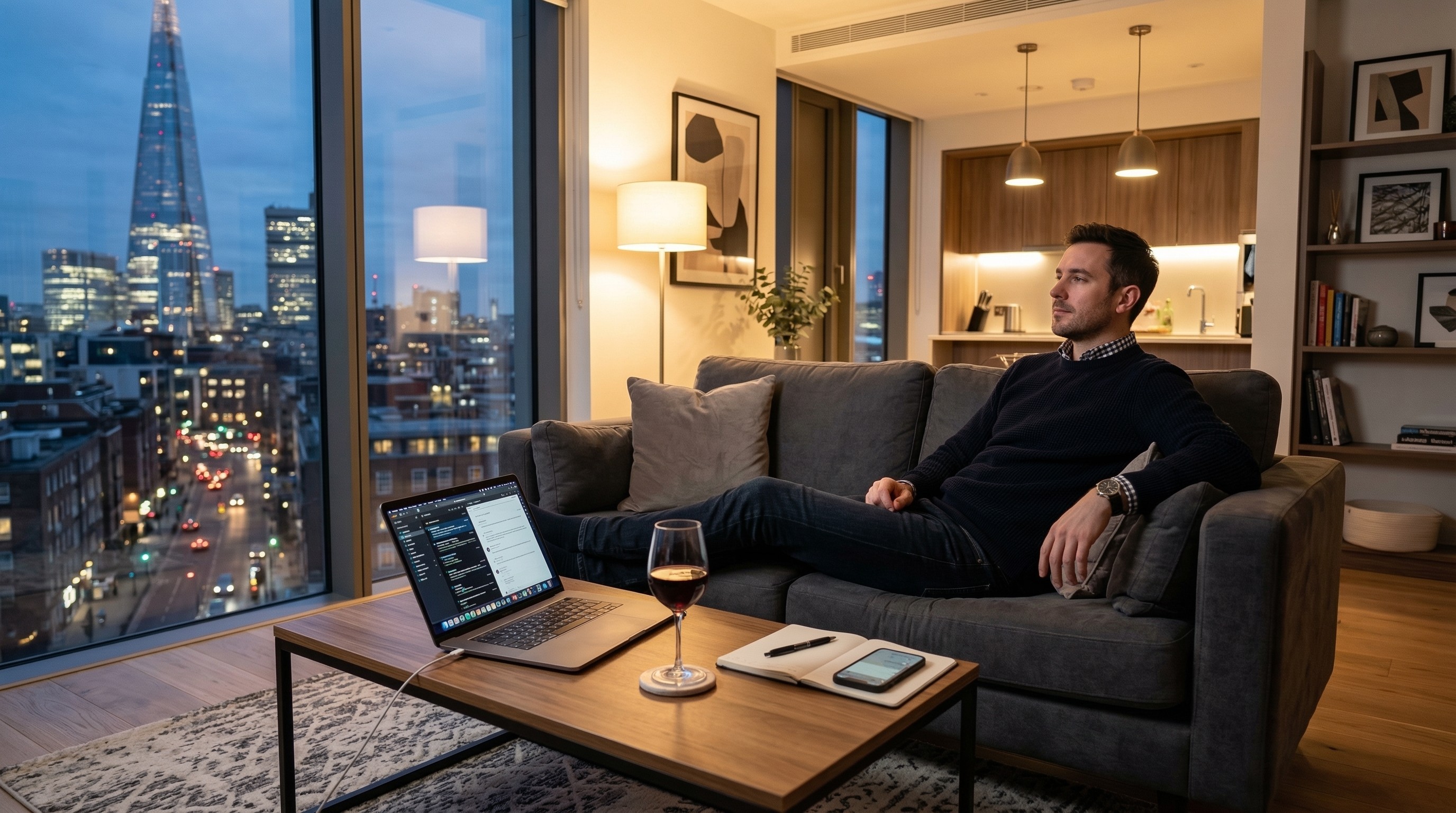
A short-term rental changes the dynamic entirely. The video call happens from a comfortable sofa in a living room. The background is a proper, lived-in space rather than a hotel room wall. The environment signals settlement and normality rather than transience and displacement. The quality of the connection, the ease of the conversation, the sense of genuine presence despite physical distance, is substantially better.
For business travellers with families, this is not a trivial benefit. The cumulative quality of connection maintained during travel affects the health of relationships over time. Accommodation that actively supports rather than impedes that connection has a real and personal value that goes well beyond anything that appears on an expense report.
8. Hidden Benefit 7: The Diet and Energy Management Advantage
Professional performance on a demanding working trip requires fuel, and the quality of that fuel matters significantly more than most business travellers consciously recognise until they start paying attention to the correlation between what they eat and how they feel and function.
Hotel living makes good nutrition difficult in structural ways. Breakfast is a buffet designed for maximum variety rather than your specific nutritional requirements. Lunch is either a room service order, a hotel restaurant, or whatever can be grabbed between meetings. Dinner is typically another restaurant meal, often preceded by client drinks, and rarely optimised for the combination of nutrients that supports good sleep and energised waking.
Across several days of this pattern, the cumulative effect on energy, focus, and physical wellbeing is measurable. The business traveller who arrives at day four of a conference running on hotel buffet breakfasts and expense-account dinners is not performing at the same level as they would at home, and their accommodation environment is a significant part of the reason.
A short-term rental with a properly equipped kitchen allows a business traveller to manage their nutrition as deliberately during a trip as they would at home. A specific breakfast that matches their normal morning nutrition. Lunch prepared from fresh ingredients bought at the local market. A dinner that is genuinely balanced rather than driven by the options available at a convenient restaurant.
The energy and focus advantage that comes from maintained nutritional quality across a working trip is substantial. Most business travellers who have made this connection through direct experience cite it as one of the most impactful hidden benefits of short-term rental accommodation.
9. Hidden Benefit 8: The Professional Image Benefit
This one requires a moment of thought because it is genuinely counterintuitive. The assumption is that hosting clients or colleagues at a hotel, with its lobby, its reception staff, and its ambient signals of corporate convention, is more professionally impressive than a short-term rental. The reality in 2026 is quite different.
A well-chosen, beautifully appointed serviced apartment in a desirable Manchester neighbourhood tells a story about the professional who is staying there. It signals discernment, local knowledge, a confidence to make unconventional choices, and an understanding of the city that goes beyond the standard corporate travel playbook. The client entertained at a dinner hosted in a properly equipped apartment kitchen, or the colleague who visits a well-furnished living room for a working session, experiences something more personal, more considered, and more memorable than a meeting room in a hotel.
In industries where client relationships are built on genuine connection and differentiated experience, the professional who creates a memorable, individual setting for an interaction stands apart from those who default to the generic. Short-term rental accommodation, managed professionally and located intelligently, can be part of that differentiation in ways that most business travellers have never considered.
Furthermore, as short-term rental accommodation becomes increasingly common among sophisticated business travellers, choosing it signals membership of a group that prioritises genuine quality over default convention. Among peers who share that orientation, the choice reflects positively on the professional making it.
10. Hidden Benefit 9: The Flexibility Premium
Flexibility is one of the most valuable commodities in modern business travel, and it is one area where short-term rentals offer advantages that hotels rarely match.
Check-in and check-out flexibility: Smart lock systems and self-check-in mean that arrival and departure are not constrained by reception desk hours or rigid check-in windows. A late-arriving flight at midnight is not a problem. An early departure for a first-flight connection is not a problem. The accommodation adapts to your schedule rather than imposing its operational rhythm on yours.
Space flexibility: If your plans change and you need to host an unplanned working session in your accommodation, a short-term rental has the space to accommodate this comfortably. A hotel room does not. A living room and a dining table provide an informal but functional meeting environment that a hotel room simply cannot offer.
Duration flexibility: Professional management companies for short-term rentals increasingly offer genuinely flexible terms around extension and early departure, recognising that business plans change. A project that was scheduled for two weeks may extend to four. A committed month may conclude early due to a change in scope. Professional operators work with these realities rather than penalising guests for the inherent unpredictability of business life.
Dietary and lifestyle flexibility: No breakfast service to miss if you are in early meetings. No restaurant closing time to manage your evening around. No gym hours to navigate. Your time is genuinely your own in a short-term rental in a way that hotel operational schedules perpetually compromise.
For business travellers who value their autonomy and whose schedules are inherently unpredictable, this flexibility premium has a real and daily practical value that becomes very apparent very quickly after the switch from hotel to short-term rental accommodation.
11. Hidden Benefit 10: The Cumulative Wellbeing Effect
The final and perhaps most important hidden benefit is one that only becomes fully visible over time, which is precisely why it is so rarely discussed. It is the cumulative wellbeing effect of consistently choosing accommodation that supports rather than erodes your physical and psychological health across a career of business travel.
Business travel takes a toll. This is well-documented. Frequent travellers report higher rates of sleep disruption, nutritional challenges, reduced exercise, relationship strain, and psychological stress than their non-travelling counterparts. The accommodation environment is not the only contributor to these outcomes, but it is a significant and consistently underestimated one.
Every night spent in accommodation that supports good sleep, every morning that begins with a proper nutritious breakfast in a calm home environment, every evening that ends in a comfortable living room rather than the edge of a hotel bed contributes positively to the long-term wellbeing trajectory of the professional living that experience. These positive contributions compound in the same way that the negative contributions of poor accommodation compound: gradually, invisibly, and with effects that only become fully apparent over time.
The business traveller who chooses short-term rental accommodation consistently over the course of a career of working travel is making a series of small, daily investments in their own health, performance, and sustainability. The return on those investments is not immediately visible on any single trip. Across months and years, it is transformative.
According to the Global Business Travel Association, employee wellbeing during business travel is an increasingly prioritised concern for both individual travellers and the organisations responsible for their duty of care. Companies that recognise the connection between accommodation quality and traveller wellbeing, and that adjust their accommodation policies accordingly, are not just being kind to their employees. They are making a rational investment in sustained professional performance and long-term talent retention.
12. The Financial Hidden Benefits Most People Miss
We touched on the direct cost comparison between short-term rentals and hotels earlier, but there are financial benefits to short-term rentals that go beyond the obvious meal-cost saving and that most business travellers have not fully calculated.
The expense report simplification benefit: A short-term rental with an all-inclusive rate covering accommodation, utilities, Wi-Fi, and council tax produces a single, clean expense line. Hotel stays produce multiple expense lines: room rate, breakfast, room service, laundry, parking, Wi-Fi in budget hotels, minibar, and various service charges. The administrative simplification of a single all-inclusive charge has a real, if modest, value in terms of time and friction.
The corporate negotiation leverage benefit: Companies that commit to short-term rental accommodation providers for their Manchester travel at volume have meaningful negotiation leverage that individual hotel night bookings do not create. Professional operators like Beyond Stays Group work with corporate clients to structure arrangements that deliver consistency, quality, and cost efficiency across multiple bookings over time.
The VAT reclaim benefit: For VAT-registered businesses, accommodation costs are a legitimate input tax claim. Professional short-term rental operators provide proper VAT invoices that facilitate straightforward reclaim processes. The administrative quality of the invoicing from a professional operator is typically cleaner and easier to process than the multiple receipts generated by a hotel stay.
The productivity value: This one is harder to quantify but genuinely real. A business traveller who sleeps better, eats better, maintains their routine, and operates in a performance-supporting environment delivers better quality work during their trip. The value of that quality improvement is difficult to put a precise number on, but it is not zero, and organisations that think seriously about the return on business travel investment are increasingly recognising it.
13. What Makes a Short-Term Rental Actually Work for Business Travel
Not every short-term rental delivers all of the benefits described in this guide. The quality of the experience depends substantially on the specific property and the management behind it. Here is what separates a short-term rental that genuinely works for business travel from one that merely provides an alternative to a hotel.
Professional management: A named, responsive management company that maintains the property to a consistent standard, handles issues promptly, and provides reliable support throughout the stay. This is the single most important differentiating factor between short-term rentals that deliver and those that disappoint.
Dedicated, functional workspace: A proper desk and ergonomic chair in a designated working area, not a kitchen table or a coffee table that doubles as a desk. For business travel, this is a non-negotiable requirement.
Fast, exclusive, reliable broadband: Not shared building Wi-Fi that degrades under load. A dedicated connection with confirmed speeds adequate for video calls, large file transfers, and concurrent device use. Always ask for the specific speed before booking.
A properly equipped kitchen: All the equipment and facilities needed to prepare the full range of meals you want to cook, without the frustration of discovering that the kitchen is missing key items on day one.
A properly separated bedroom: A bedroom that functions exclusively as a sleep environment, separated from the workspace and living area, with quality blackout provisions and a comfortable mattress.
Location intelligence: A property that is well-positioned relative to your work commitments, your daily commute, and your access to the amenities that support your routine, including supermarkets, gyms, and green spaces.
Clear, professional booking terms: Transparent pricing, clear cancellation and extension terms, professional invoicing, and a straightforward check-in and check-out process.
Our comprehensive guide to short stay apartments in Manchester covers the full booking process in detail, including a complete checklist of questions to ask before confirming any booking, and is worth reading before your first short-term rental stay.
14. Why Manchester Is One of the UK's Best Cities for Business Short-Term Rentals
Manchester combines everything a business traveller needs from a destination with an exceptionally strong short-term rental market that delivers on the promise of quality, location diversity, and professional management.
The city's business landscape is genuinely diverse. Financial services, digital and technology, media and creative industries, life sciences, construction, and professional services all generate significant volumes of business travel to Manchester throughout the year. This diversity of demand has driven the development of a short-term rental market that is broad, competitive, and increasingly sophisticated in its quality and management.
The Metrolink tram network makes location flexibility genuinely practical. A short-term rental in Ancoats, Castlefield, or Spinningfields, each very different in character, all provide excellent connectivity to the broader city and to key business districts via a reliable and affordable public transport system.
The quality of Manchester's neighbourhoods for everyday living is exceptional. Ancoats delivers a world-class food and coffee scene on the doorstep. Castlefield provides genuine peace and outdoor space within the city. The Northern Quarter offers creative energy and independent character. Spinningfields delivers the polished professional environment that some corporate contexts specifically call for. For the business traveller who wants their accommodation to enhance rather than merely support their city experience, Manchester's neighbourhood diversity is a significant asset.
And for those who want personalised guidance on matching their specific business travel requirements to the right Manchester neighbourhood and property, the team at Beyond Stays provides exactly the kind of knowledgeable, personal service that makes the difference between a good business trip and an excellent one.
15. How Beyond Stays Unlocks Every One of These Benefits for Business Travellers
Every hidden benefit discussed in this guide depends on one foundational requirement: the quality and professionalism of the management behind the short-term rental. A beautifully designed apartment managed carelessly unlocks none of these benefits. A thoughtfully managed apartment in a well-chosen location unlocks all of them.
Beyond Stays Group has built their entire operation around delivering exactly this quality of professional management to business travellers and all other guests in Manchester. Their property portfolio is curated against a defined quality standard that ensures every business traveller who books through them arrives at a property that is ready, functional, and genuinely supportive of professional performance.
Every property in their portfolio has fast, reliable broadband confirmed and tested before guest arrival. Every property has a dedicated workspace that meets the genuine requirements of a working professional. Every kitchen is properly equipped and stocked with the basics to support self-catering from day one. Every bedroom is a proper sleep environment. And every guest has access to a responsive, professional management team throughout their stay.
For corporate travel managers and HR teams managing business travel programmes, Beyond Stays offers the consistency, administrative simplicity, professional invoicing, and flexible booking terms that make managing business accommodation genuinely straightforward. For individual business travellers making their own bookings, the Beyond Stays team provides personalised advice on which property and neighbourhood best suits the specific requirements of each trip.
Whether you are a solo professional on a three-day client visit, a project manager spending six weeks leading a team in Manchester, or a corporate travel manager seeking a better accommodation solution for your organisation's regular Manchester travel, Beyond Stays has the expertise, the properties, and the commitment to unlock every hidden benefit of short-term rental accommodation for every business traveller in their care.
Ready to experience the hidden benefits of short-term rentals on your next Manchester business trip? Book a call with the Beyond Stays team today. Tell them about your trip, your working requirements, and your priorities, and they will match you with a property that delivers not just a place to stay but a genuine competitive advantage for your time in the city.
FAQs: Hidden Benefits of Short-Term Rentals for Business Travellers
1. What are the most significant hidden benefits of short-term rentals for business travellers?
Beyond the well-known advantages of space and cost, the most significant hidden benefits include the performance environment advantage of having physically separated work and rest spaces, the routine preservation effect that supports daily professional habits, the cognitive load reduction of living in a familiar and intuitive domestic environment, the sleep quality differential that comes from a residential acoustic environment, and the cumulative wellbeing effect of consistently choosing accommodation that supports rather than erodes health and performance across a career of business travel.
2. How do short-term rentals support remote and hybrid workers better than hotels?
Short-term rentals provide a dedicated workspace separate from the bedroom, exclusive broadband rather than shared hotel Wi-Fi, a kitchen that supports the nutritional routine of a normal working day, and a living environment organised around sustained daily function rather than transient overnight occupation. These structural advantages directly support the requirements of remote and hybrid workers who need to maintain full professional productivity from their accommodation throughout their stay.
3. Are short-term rentals suitable for very short business trips of one or two nights?
For a single overnight stay, the benefits of a short-term rental are real but less decisive than for longer trips, and a well-located hotel may be a more practical choice if a very early departure or very late arrival is involved. For two or more nights, even on a shorter trip, the sleep quality, workspace quality, and routine preservation benefits of a short-term rental typically deliver a meaningfully better experience for a business traveller than a comparable hotel.
4. How do I ensure the short-term rental I book actually delivers these benefits rather than just promising them?
Book through a professional management company rather than an unmanaged private listing. Ask specifically about broadband speed, workspace provision, kitchen equipment, and the management team's availability and response time before confirming your booking. Read recent guest reviews specifically for comments from business travellers about workspace quality and management responsiveness. A professional operator like Beyond Stays will answer all of these questions clearly and will have a verifiable track record of delivering on their commitments.
5. Can my company arrange short-term rentals for multiple team members on a project in Manchester?
Yes, and doing so through a single professional provider like Beyond Stays Group offers significant advantages over individual hotel bookings. Professional invoicing, consistent quality standards across multiple properties, flexible terms that accommodate the unpredictable nature of project timelines, and a single point of accountability for all accommodation-related queries all make corporate short-term rental arrangements substantially simpler and more effective than managing individual hotel bookings for a project team.