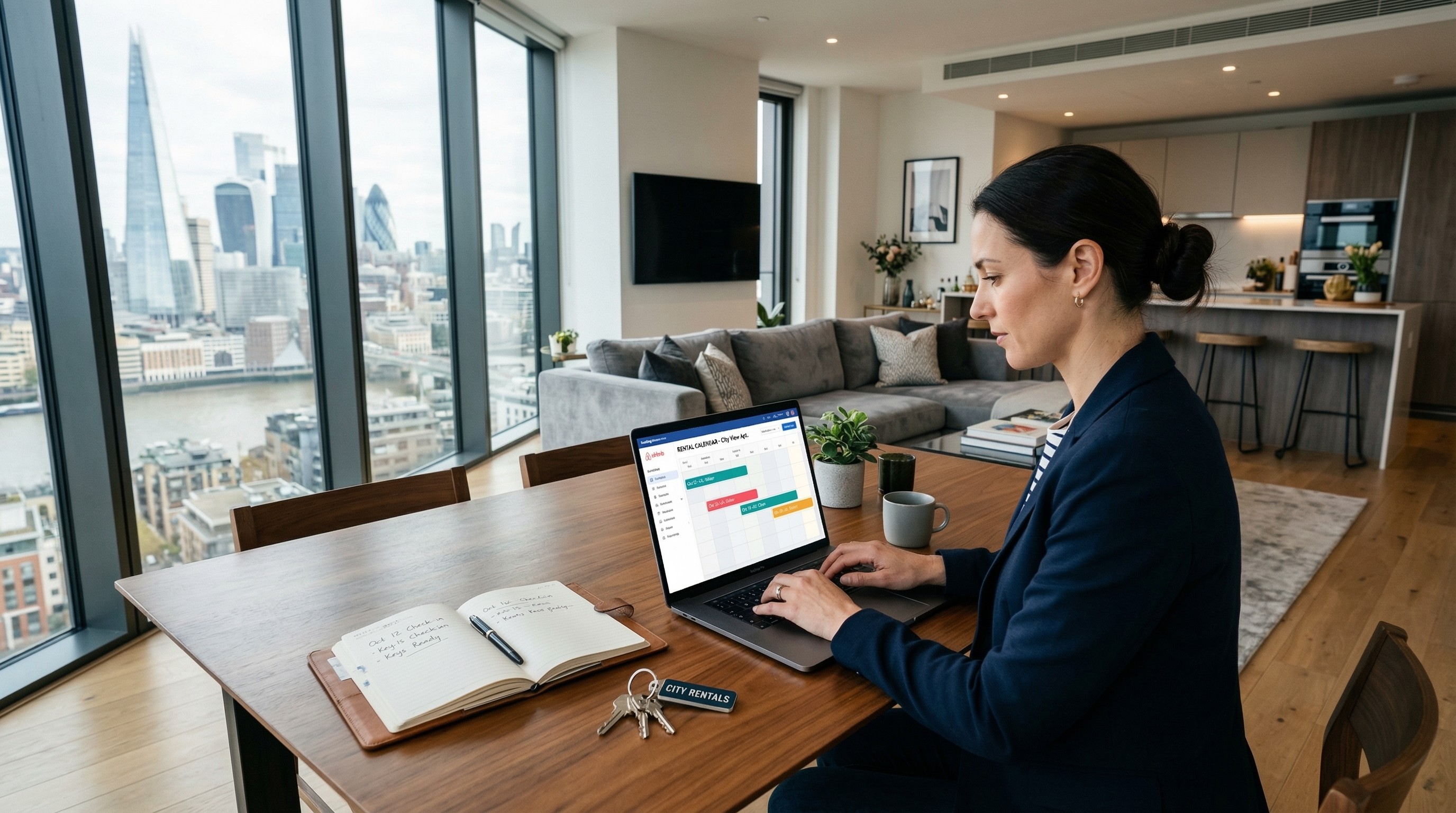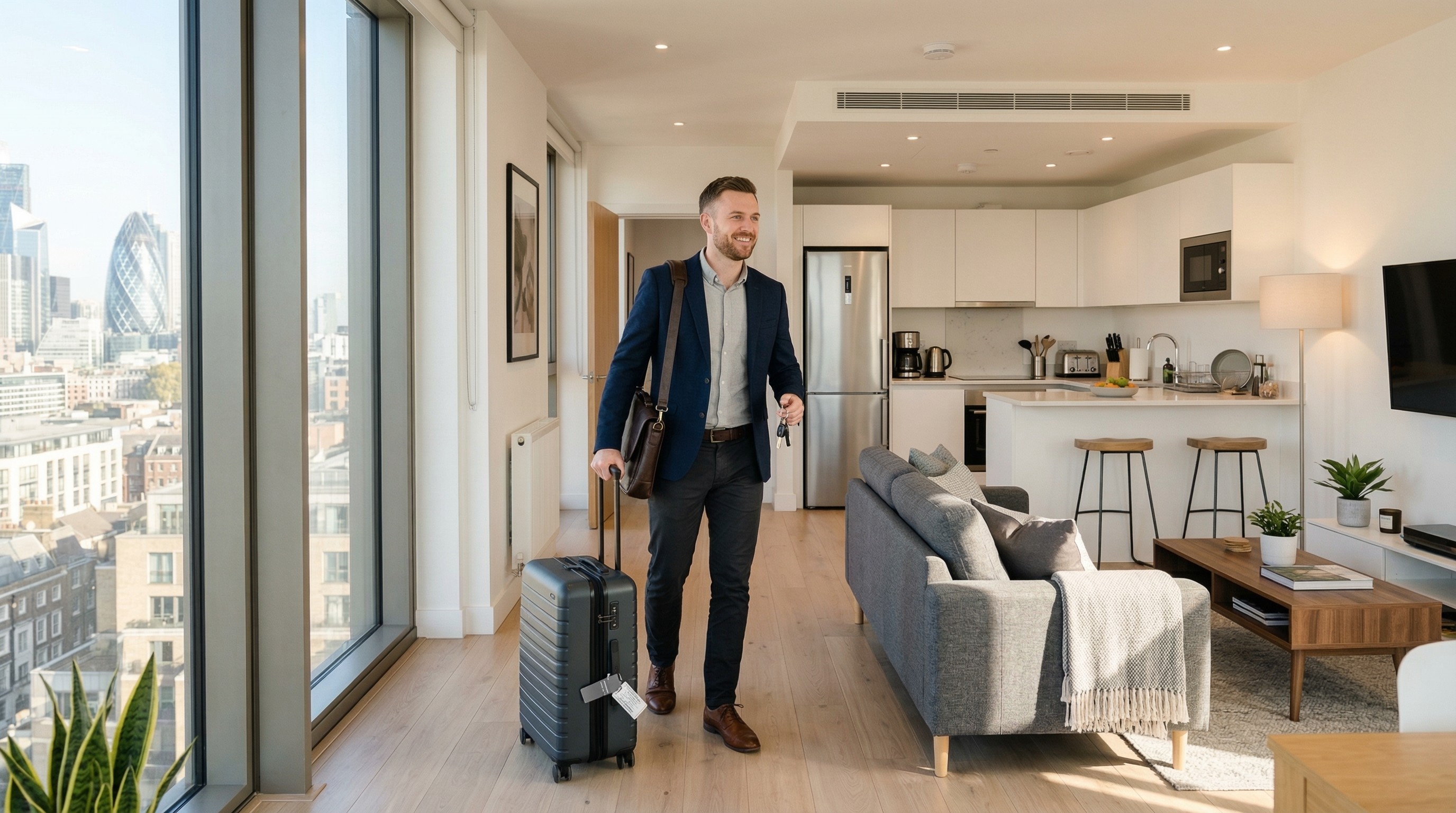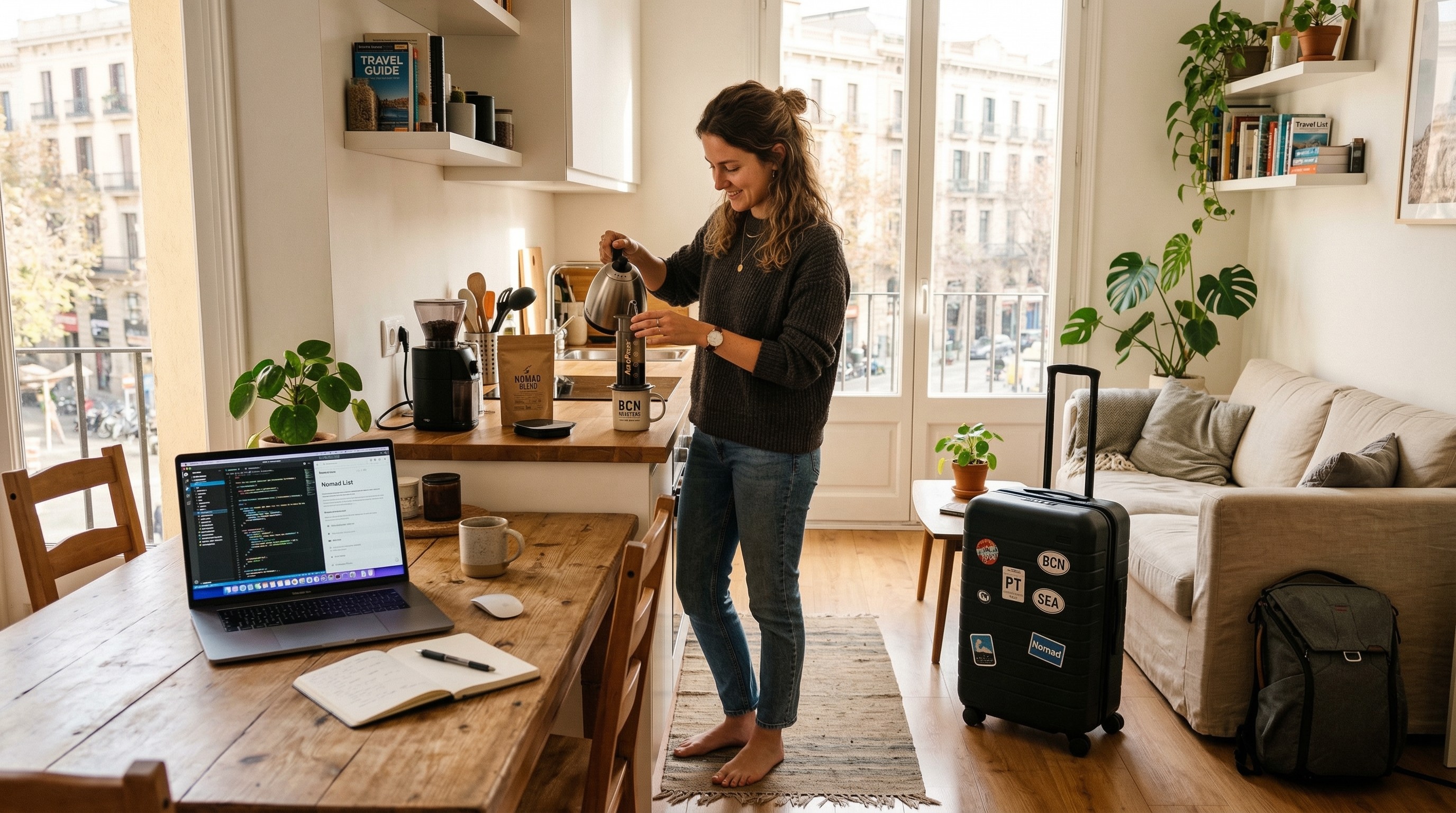
Remote Work + Travel: Why Serviced Accommodation Is the Ultimate Digital Nomad Upgrade
Something remarkable has happened to the geography of work over the past few years. The idea that a job requires a fixed desk in a fixed building in a fixed city has, for millions of professionals, become genuinely optional. Laptops are powerful. Internet is everywhere. Video call technology is seamless. Cloud infrastructure has made the physical office location largely irrelevant for a huge proportion of knowledge workers. And the result of all of this is a generation of professionals who have discovered, some gradually and some all at once, that they can work from wherever makes most sense for their life rather than wherever their employer happened to sign a lease.
This is the digital nomad moment. And it is much broader than the image of a twenty-something freelancer typing on a beach laptop. It includes the senior consultant who splits their month between London and Manchester. The marketing director who has negotiated a permanent remote arrangement and wants to spend six weeks exploring the North of England. The software engineer whose entire team is distributed and who has never needed to be in a specific office in the first place. The entrepreneur who wants to spend an extended period in a new city to better understand a market they are building for.
What all of these people have in common, beyond the freedom to work from anywhere, is a very specific accommodation problem. They need somewhere that is genuinely good to work from. Not a hotel room that technically has Wi-Fi and a small desk, but a real, properly equipped, reliably connected, comfortable working and living environment. They need to be productive during the day and genuinely rested in the evenings. They need to maintain their health, their routines, and their professional output across days and weeks that blend work and exploration in proportions that shift from week to week.
They need, in short, something that most accommodation options are not actually designed to provide. And the option that comes closest, that serves the needs of the modern remote worker and digital nomad better than any alternative, is professionally managed serviced accommodation.
This guide explains precisely why that is, and what it means for your next working stay in Manchester or anywhere else you choose to take your work.
1. The Rise of the Remote Worker and What It Means for Accommodation
The numbers tell a clear story. According to the Office for National Statistics, the proportion of UK workers who work from home at least some of the time has increased dramatically since 2019 and has not returned to pre-pandemic levels. Remote and hybrid working is now a structural feature of the UK labour market rather than a temporary pandemic adaptation. And a growing subset of that remote workforce has taken the logical next step: if location is optional, why stay in one place?
The digital nomad population has grown substantially and diversified considerably. It is no longer a niche lifestyle choice for a narrow demographic of freelancers and tech workers. It encompasses professionals across a wide range of industries and career stages who have identified that the combination of remote work flexibility and intentional travel creates a quality of life that static living simply does not offer.
What does this mean for accommodation?
It means that a rapidly growing number of people are spending extended periods, weeks and months rather than days, living and working from accommodation that is not their permanent home. They are not on holiday. They are not on a business trip in the traditional sense. They are doing their full-time work from a different location, for professional, personal, or lifestyle reasons, and they need accommodation that serves the full complexity of that situation.
The accommodation industry has been slower to respond to this need than the technology industry has been to enable it. Hotels, designed for transient overnight occupation, are fundamentally ill-suited to extended working stays. Standard rental properties, requiring tenancy agreements and setup periods that do not align with a flexible location lifestyle, are impractical for stays of weeks or months. The gap between these two options is where professionally managed serviced accommodation sits, and it serves the needs of the modern remote worker and digital nomad better than anything else available.
2. Why Hotels Fail the Remote Worker Test
To understand why serviced accommodation is such a strong upgrade for remote workers, it helps to understand precisely where hotels fall short. Because on the surface, a hotel seems like it should work. It has a bed, a desk, Wi-Fi, and room service. What more do you need?
The answer is: quite a lot more, once you are doing your actual job from the room rather than just passing through it.
The workspace problem: A hotel desk is designed to accommodate the occasional email or document review, not sustained professional work across an eight-hour day. The dimensions are typically narrow, the chair is chosen for compactness rather than ergonomic support, and the positioning within the room is an afterthought relative to the placement of the bed and the television. Spend one day working from a hotel desk and it is merely uncomfortable. Spend five days, and the cumulative impact on your posture, your focus, and your physical wellbeing is genuinely significant.
The connectivity problem: Hotel Wi-Fi is shared infrastructure. When you are one of several hundred guests in a building, all drawing on the same network, speeds vary enormously depending on load. A video call that runs perfectly at 7am may become unreliable at 10am when the building fills with people. For a remote worker whose professional credibility depends on showing up reliably and effectively to virtual meetings, this unreliability is not a minor inconvenience. It is a professional liability.
The space problem: A hotel room gives you one environment for everything. You work where you sleep. You eat where you work. You relax where you sleep. There is no physical transition between work mode and rest mode because there is no physical distinction between the spaces. For remote workers who depend on clear psychological boundaries between work and recovery to maintain both productivity and wellbeing, this collapsed spatial logic is actively harmful.
The cost problem: Hotels that are functional for extended working stays, with reliable internet, adequate workspace, and reasonable food options, are not cheap. And the longer you stay, the more the ancillary costs accumulate. Breakfasts, lunches, dinners, laundry, parking. By week two of a hotel stay, the bill is well beyond what the headline nightly rate suggested, and the experience does not improve proportionally with the spend.
The sustainability problem: Spending weeks in a single hotel room is not a sustainable way to live and work. The spatial limitation, the absence of cooking facilities, the inability to maintain normal routines and habits, and the perpetual sense of impermanence all take a cumulative psychological toll that ultimately affects both performance and wellbeing. Remote workers who have tried extended hotel stays consistently report reaching a point of genuine exhaustion that has nothing to do with their workload and everything to do with their accommodation environment.
3. Why Standard Rentals Create Their Own Set of Problems
If hotels fall short at one end of the accommodation spectrum, standard private rentals create a different set of challenges at the other. For a remote worker or digital nomad who wants the flexibility to stay somewhere for six weeks and then move on, the traditional rental market is deeply unsuitable.
The commitment problem: Standard private rentals in the UK typically require a minimum tenancy of six months. For someone whose lifestyle is built around the flexibility to move between cities and locations at relatively short notice, a six-month legal commitment to a specific property in a specific location is fundamentally incompatible with their way of working and living.
The setup problem: Moving into a private rental requires arranging utility accounts, broadband installation, contents insurance, and a range of other domestic administration tasks that take time and energy to set up and then need to be unwound when you leave. For a stay of six to twelve weeks, this administrative overhead is disproportionate to the duration of the stay.
The furnishing problem: Most private rentals in the UK are offered unfurnished or minimally furnished. A remote worker arriving for a six-week stay needs to be operational from day one. Furnishing a rented flat for a six-week stay is neither practical nor economically sensible.
The credit and referencing problem: Private landlords require references, often including employment references, bank statements, and sometimes a UK guarantor. For a self-employed digital nomad or a professional whose income comes from multiple sources or from overseas, meeting the referencing requirements of the private rental market can be genuinely difficult.
The gap between hotels and private rentals is real and significant, and it is the gap that professionally managed serviced accommodation fills with precision.
4. What Remote Workers Actually Need From Their Accommodation
Let us be specific about the actual requirements of a remote worker or digital nomad's accommodation, because specificity is what separates useful guidance from vague generalisations.
Non-negotiable requirements:
Fast, exclusive, reliable broadband that maintains consistent speeds throughout the working day regardless of building occupancy. This is the single most critical technical requirement and the one that most accommodation options fail to adequately address.
A dedicated workspace that is physically separate from the sleeping area. A proper desk with sufficient surface area, an ergonomic chair, and adequate lighting for sustained work sessions including video calls.
A fully equipped kitchen with everything needed to prepare all meals. Breakfast, lunch, and dinner from a proper kitchen is the foundation of nutritional self-management during an extended working stay.
A comfortable living area that is physically distinct from both the workspace and the sleeping area. The ability to transition from work mode to rest mode via a physical change of space is more psychologically important than most remote workers realise until they experience what happens without it.
A washing machine for laundry management across a stay of weeks.
A comfortable bed with proper blackout provisions to support the quality of sleep that sustained professional performance depends on.
Important but negotiable:
Outdoor access, ideally a balcony or easily accessible green space nearby, for the mental health benefits of daily fresh air and physical distance from screens.
Proximity to good independent coffee shops that can serve as occasional alternative working environments for variety and social contact.
Access to a gym or strong local walking and running routes to support the exercise habits that remote workers need to maintain deliberately during extended stays away from home.
Good local food shopping for the self-catering that is central to healthy working stays.
Clear, professional management support for the duration of the stay, with fast response times to any issues that arise.
5. The Broadband Question: Why This Is Non-Negotiable
Remote workers and digital nomads have learned, often through painful direct experience, that broadband quality is not a secondary accommodation consideration. It is the foundation on which their entire professional capability during a working stay is built.
A slow connection means choppy, unreliable video calls that damage professional credibility and client relationships. A connection that drops under building load means presentations interrupted at critical moments and deadlines missed because large files cannot upload in time. A connection that is fast at 7am and unreliable by 9am means a morning of productive work followed by an afternoon of frustrated workarounds.
What a remote worker specifically needs from their broadband:
Download speeds of at least 50 megabits per second, and ideally higher for those regularly working with large file types or high-definition video content. Upload speeds of at least 20 megabits per second, which is the dimension that most affects video call quality and is the one that shared hotel Wi-Fi most commonly fails on. A dedicated connection that is not shared with other building guests. Consistency across the full working day rather than peak-time performance only.
What to ask before booking any accommodation for remote work:
Always request the specific download and upload speeds of the broadband connection in the property, not a vague assurance that Wi-Fi is available. Ask whether the connection is dedicated to the property or shared across the building. Ask whether there are data limits or throttling policies that could affect sustained use across a working day.
A professional serviced accommodation provider will answer these questions specifically and honestly. An evasive or vague response to the broadband question is one of the clearest early warning signs that the accommodation will not serve a remote worker's needs.
6. The Workspace Configuration That Actually Works
For remote workers spending extended periods in their accommodation, the workspace configuration has a direct and measurable impact on both professional output and physical wellbeing. Getting this right is as important as any other element of the accommodation decision.
What an effective remote working workspace requires:
A desk with adequate surface area for the work being done. A laptop or monitor occupying one portion of the desk, with space for notes, a coffee, and the inevitable accumulation of working materials alongside. A desk that is too narrow or too shallow for this purpose forces the working posture into compromises that become genuinely uncomfortable over hours of daily use.
An ergonomic chair that provides proper back and lumbar support. The chair is the element of a workspace that most accommodation options compromise on most severely. A decorative dining chair or a hotel room occasional chair may look fine in a photograph but will cause real physical discomfort over sustained use. Always ask specifically about the type of desk chair provided if this matters to your work.
Good lighting at the workspace, both for the comfort of extended screen-based work and for the quality of appearance on video calls. Natural light is ideal. A dedicated desk lamp that provides focused task lighting without casting shadows is the minimum acceptable standard.
A workspace that is acoustically suitable for video calls and phone calls without background noise from neighbouring guests, street traffic, or building systems intruding at inconvenient moments.
Physical separation between the workspace and the sleeping area. Not just visual separation, with a screen or a curtain, but a proper separate room or at minimum a genuinely distinct zone within a larger open-plan space. The ability to close the door on the workspace at the end of the working day, physically and symbolically, is one of the most important psychological mechanisms for maintaining the work-life boundary during an extended remote working stay.
7. Kitchen Access and the Nutrition-Performance Connection
The relationship between nutrition and cognitive performance is one of the most robustly evidenced areas of applied performance science, and it has direct implications for remote workers on extended working stays.
The basic finding: What you eat, when you eat it, and how consistent your eating patterns are across a working week significantly affects your cognitive performance, your energy levels, your emotional regulation, and your capacity for sustained focus. These are not marginal effects. They are substantial and measurable.
The remote work implication: A remote worker who is eating well, maintaining consistent meal timing, and fuelling their brain with appropriate nutrition will consistently outperform a remote worker who is eating irregularly, relying on restaurant and takeaway food for every meal, and experiencing the energy peaks and troughs that come from nutritionally inconsistent eating patterns.
The accommodation implication: A fully equipped kitchen is not a lifestyle preference for a remote worker on an extended stay. It is a professional performance tool. The ability to make a proper breakfast before the working day begins. To prepare a balanced lunch without the distraction and time cost of leaving the building and finding food. To cook a proper evening meal that supports recovery and good sleep. These are operational requirements, and the accommodation that provides the kitchen infrastructure to meet them supports better professional performance than accommodation that does not.
What to check about the kitchen before booking:
A proper hob with multiple burners. A full-size oven and microwave. A well-stocked fridge with adequate freezer space. Sufficient quality cookware, crockery, and utensils to prepare the full range of meals you want to cook. A dishwasher for extended stays that makes the domestic management of the kitchen genuinely sustainable. Basic storecupboard essentials, oil, salt, spices, provided on arrival to avoid a comprehensive first-day shop.
8. Routine, Structure, and the Psychology of Remote Work on the Road
Remote work requires more deliberate structure than office work. In an office, the structure is imposed externally by commute times, meeting schedules, the presence of colleagues, and the physical architecture of a work environment. When you work remotely, that external structure largely disappears, and the professional who thrives is the one who builds and maintains their own structure deliberately.
Accommodation that supports the establishment and maintenance of routine is therefore much more than a comfort consideration for a remote worker. It is a productivity infrastructure decision.
What routine-supporting accommodation provides:
A consistent morning environment in which your established morning routine, whatever form that takes for you, can be replicated reliably each day. The specific breakfast, the specific coffee, the specific sequence of pre-work preparation that shifts your brain into professional mode.
A workspace that signals work and only work. When you sit at the desk in a dedicated workspace, you work. When you leave that desk and move to the sofa or the kitchen table, you are not working. This physical signal system is one of the most effective mechanisms for maintaining productivity and preventing the blurring of work and rest that is one of the most common challenges of remote working.
An evening environment that genuinely supports decompression and recovery. A sofa in a living room that is not also the desk where you spent eight hours working. A kitchen where you can cook dinner as a transition ritual between work mode and evening mode. A bedroom that is exclusively a sleep environment.
The accommodation that provides all of these distinct spaces and supports all of these distinct routines is the accommodation that enables a remote worker to maintain sustainable performance over weeks and months rather than degrading into the exhaustion and frustration that undermined working environments inevitably produce.
9. The Community and Social Connection Dimension
One of the less-discussed challenges of the remote work and digital nomad lifestyle is the social dimension. When your professional life is conducted primarily through a screen and your geographical location changes regularly, the maintenance of meaningful social connection requires deliberate effort.
The accommodation-neighbourhood connection matters here:
Staying in a genuine neighbourhood, with its own independent coffee shops, restaurants, gyms, and community spaces, rather than in a hotel in a commercial district, provides the daily social infrastructure that sustains wellbeing during extended solo working stays.
The coffee shop where you work for a couple of hours on a Tuesday morning and where the barista knows your order by Wednesday becomes a small but genuine anchor of social normality. The restaurant where you eat twice a week and where you start to recognise the staff creates a sense of being a regular rather than a tourist. The running route through a neighbourhood park where you see the same faces each morning generates a minimal but meaningful sense of community membership.
These micro-social connections are not a substitute for deep relationships, but they are genuinely important for the psychological wellbeing of remote workers on extended solo stays in unfamiliar cities. The accommodation that is embedded in a real neighbourhood, rather than isolated in a hotel building designed for transient commercial occupancy, actively supports the formation of these connections.
Manchester is particularly strong for this dimension.
The city's neighbourhood coffee culture is exceptional, with genuinely outstanding independent roasters and cafe operators across Ancoats, the Northern Quarter, Didsbury, and the broader city centre who build genuinely welcoming community environments. Co-working spaces, many of which offer day passes or flexible memberships for remote workers who want professional social contact without committing to a permanent desk, are available across the city in increasing numbers. And the city's remarkable food and social scene provides an evening social dimension that makes spending weeks in Manchester genuinely enjoyable rather than merely functional.
10. Manchester as a Remote Work Destination: Why It Works So Well
Manchester is one of the UK's most compelling cities for remote workers and digital nomads, and the combination of factors that make it so are worth understanding in detail.
The infrastructure: Manchester's connectivity is outstanding. Manchester Airport provides direct flights to hundreds of destinations globally, making it extremely practical as a base for professionals who need to travel internationally from time to time. The city's train connections to London, Edinburgh, Leeds, Liverpool, and Birmingham are frequent and fast. The internal Metrolink tram network makes getting around the city efficient and affordable. And the city's digital infrastructure, with high-speed broadband available across residential and commercial areas, supports the connectivity requirements of remote work reliably.
The quality of life: Manchester consistently ranks among the UK's most liveable cities for a combination of cultural offering, food scene, green space access, and overall urban quality. The cost of living is significantly lower than London while delivering a quality of cultural and social experience that competes with the capital in most respects. For remote workers who are weighing up where to base themselves, this combination of quality and value is a compelling proposition.
The neighbourhood diversity: As explored throughout our broader guide series on where to stay in Manchester, the city offers a range of genuinely distinct neighbourhood experiences that serve different working and lifestyle preferences. Whether you want the creative intensity of Ancoats, the calm of Castlefield, the village feel of Didsbury, the professional polish of Spinningfields, or the characterful independence of the Northern Quarter, Manchester has a neighbourhood that matches your working style and personal preferences with genuine precision.
The digital and creative ecosystem: Manchester has one of the UK's most vibrant digital and creative business communities, centred around MediaCityUK in Salford but extending across the city's tech, design, marketing, and content sectors. For remote workers in these industries, being in Manchester provides access to a professional peer community, networking opportunities, and a business culture that understands and celebrates remote and flexible working in ways that reinforce rather than marginalise the remote worker identity.
The events and cultural programme: One of the frequently underappreciated benefits of choosing a specific city for an extended remote working stay is the access to cultural and social events that punctuate the working routine. Manchester's calendar of live music, theatre, sport, food events, and festivals is exceptional and provides the kind of experiential richness that distinguishes a genuinely stimulating working stay from a mere change of scenery.
11. Best Manchester Neighbourhoods for Remote Workers and Digital Nomads
The right neighbourhood for a remote working stay in Manchester depends on your specific professional context, your working style, and what you want from the non-working hours of your stay. Here is an honest guide to the best options.
Ancoats: The Creative Professional's Neighbourhood
Ancoats is the natural home for remote workers in digital, creative, design, marketing, technology, and media sectors. The neighbourhood's professional community is aligned with these industries, the independent coffee culture is outstanding for working-from-cafe sessions, and the overall atmosphere is energising in a way that feeds creative and intellectual work rather than draining it.
The apartment stock in Ancoats is among the finest in Manchester, with beautiful converted mill buildings housing generously proportioned, thoughtfully designed serviced apartments that combine the aesthetic appeal of industrial heritage architecture with modern specification. Canal-side walking routes provide excellent outdoor breaks from screen time.
The Northern Quarter: The Independent Worker's Neighbourhood
The Northern Quarter is ideal for freelancers, consultants, and independent professionals who thrive in a characterful, individualistic environment. The density of excellent independent coffee shops creates a rich ecosystem of alternative working spaces for those who need occasional variety from their apartment workspace. The creative energy of the neighbourhood feeds the kind of lateral thinking that independent work often requires.
Castlefield: The Deep Focus Neighbourhood
For remote workers whose professional output depends on sustained deep focus, Castlefield's calm, residential character provides an environment that is difficult to match anywhere else in the city centre. The absence of the noise and activity that characterises more commercial neighbourhoods creates the acoustic and psychological space that deep intellectual work requires. Canal-side walks between work sessions provide genuine mental recovery rather than the overstimulation of busier neighbourhoods.
Didsbury: The Long-Stay Neighbourhood
For remote workers planning stays of several weeks or months, Didsbury's fully residential character makes it the most sustainable long-term base in Greater Manchester. The infrastructure of everyday life, supermarkets, restaurants, coffee shops, pharmacies, green spaces, and gyms, is outstanding. The quality of the apartment stock is high. And the Metrolink connection to the city centre means access to the full range of Manchester's professional and cultural offer is always available.
Spinningfields: The Corporate Remote Worker's Neighbourhood
For professionals whose remote work involves regular in-person engagements with Manchester's financial, legal, or corporate business community, Spinningfields provides the most professionally aligned base in the city. The neighbourhood's premium restaurant scene supports client entertainment. The proximity to the city's major corporate law firms, financial institutions, and professional services businesses minimises travel time for the in-person meetings that punctuate remote working weeks.
12. The Financial Case: What Remote Work Accommodation Really Costs
For digital nomads and remote workers managing their own accommodation costs, the financial case for professionally managed serviced accommodation over hotels is compelling and worth calculating explicitly.
A realistic six-week cost comparison for a solo remote worker in Manchester:
Option A: Mid-range hotel at £120 per night. Six weeks at seven nights equals 42 nights, totalling £5,040 for accommodation alone. Add breakfast at £15 per day: £630. Add lunch, mostly from hotel or nearby restaurants at an average of £15 per day: £630. Add dinner, mostly at restaurants at an average of £30 per day: £1,260. Add hotel laundry for six weeks: approximately £180. Total: approximately £7,740.
Option B: Quality one-bedroom serviced apartment at a six-week rate of approximately £3,000 to £3,600 all inclusive. Groceries and self-catering across six weeks at approximately £80 per week: £480. Eating out two or three times per week at an average of £35 per occasion: approximately £630. Total: approximately £4,110 to £4,710.
The saving on a six-week working stay: between £3,000 and £3,600. That is a meaningful sum that could fund travel to the next destination, cover professional development costs, or simply represent a significant improvement in the financial sustainability of a location-flexible working lifestyle.
For remote workers who are managing their own costs rather than expensing accommodation to an employer, this financial case is not peripheral. It is central to the viability of the lifestyle they have chosen.
13. What to Look for When Booking Serviced Accommodation for Remote Work
The checklist for a remote worker booking serviced accommodation is more specific than the checklist for a leisure traveller, because the professional requirements add several critical dimensions to the standard accommodation evaluation.
Before you book, confirm explicitly:
The specific download and upload speeds of the dedicated broadband connection. Not "high-speed Wi-Fi available" but actual confirmed megabit per second figures.
The desk dimensions and chair type in the workspace. A photograph of the workspace itself, showing its full size and configuration, is worth requesting if not provided in the listing photography.
The kitchen's full equipment list, specifically the presence and quality of the hob, oven, fridge, freezer, and cookware.
The exact housekeeping schedule and what it covers, so you can plan your working week around any housekeeping visits.
The management team's typical response time to maintenance and support requests, which matters more on a six-week stay than on a two-night visit.
The cancellation and extension policy, in case your project timeline shifts or your personal plans change during the stay.
The minimum and maximum booking duration, to ensure the property is genuinely available for the duration you are planning.
Our comprehensive guide to short stay apartments in Manchester provides a full pre-booking checklist and detailed guidance on evaluating any serviced accommodation option, and is essential reading before your first extended remote working stay.
14. How Long Should a Remote Working Stay in Manchester Be?
This is a question that remote workers and digital nomads regularly wrestle with, and there is no single correct answer. But there are useful principles that experienced location-flexible workers have developed through direct experience.
The minimum stay for genuine productivity: Most remote workers find that it takes two to four days to settle properly into a new location and reach their normal level of professional productivity. During those initial days, the novelty of the new environment, the logistics of getting set up, and the cognitive adjustment to a new workspace all take up bandwidth that would otherwise be available for work. A stay of less than a week means you are leaving just as you have hit your stride.
The sweet spot for most remote workers: Stays of two to six weeks represent the optimal range for most remote workers choosing Manchester as a working base. This is long enough to genuinely settle into a neighbourhood, establish productive local routines, build a working knowledge of the city, and experience the social and cultural richness that Manchester offers without the novelty wearing off. It is also short enough to maintain the sense of intentionality and excitement that makes location-flexible work feel like a genuine lifestyle upgrade rather than merely a change of wallpaper.
Extended stays of two to six months: For remote workers who want to deeply inhabit a city rather than sample it, or for professionals who are relocating to Manchester permanently and want a period of settled exploration before committing to a specific neighbourhood and property, extended stays of two to six months deliver a genuinely different quality of experience. Didsbury and Ancoats are the strongest choices for stays of this duration, both offering the residential infrastructure and community depth that sustained long-term living requires.
The key principle: The right duration for your Manchester remote working stay is the one that allows you to be genuinely productive, genuinely settled, and genuinely engaged with the city you have chosen to be in. Long enough to move beyond tourist mode. Short enough to maintain the sense of purposeful intention that makes this lifestyle meaningful.
15. How Beyond Stays Supports Remote Workers and Digital Nomads in Manchester
Every dimension of the remote worker and digital nomad accommodation requirement described in this guide comes together most reliably in one place: a professionally managed serviced accommodation provider who genuinely understands what working travellers need and has built their operation around delivering it.
Beyond Stays Group has developed specific expertise in supporting remote workers and extended-stay guests across Manchester's best neighbourhoods. Their approach reflects a genuine understanding that a remote worker's accommodation is not just somewhere to sleep between working days. It is the operational centre of their professional and personal life during their time in the city, and it needs to function accordingly.
Every property in the Beyond Stays portfolio has been evaluated against the specific requirements of working guests. Broadband speeds are confirmed and tested before guest arrival, not simply described as adequate. Workspaces are genuinely functional, with proper desks and supportive chairs rather than decorative alternatives. Kitchens are properly equipped for daily self-catering without gaps or omissions in the equipment list. Bedrooms are configured for the quality of sleep that sustained professional performance requires. And the management team is responsive, professional, and genuinely invested in each guest's experience throughout their stay.
For remote workers who need flexibility in their booking terms, Beyond Stays offers the kind of adaptable arrangements that the unpredictable nature of location-flexible work requires. Stays can be extended or concluded with appropriate notice. Properties can be matched to changing location preferences as a remote worker's Manchester experience deepens. And the personal knowledge of Manchester's neighbourhoods that the Beyond Stays team brings to every conversation means that their recommendations genuinely improve the quality of the working stay experience rather than simply processing a booking request.
Whether you are a solo remote worker planning your first extended Manchester stay, a distributed team looking for a cluster of serviced apartments in a shared neighbourhood, or a digital nomad adding Manchester to a longer UK working itinerary, Beyond Stays has the properties, the management quality, and the local expertise to make your working stay in Manchester genuinely exceptional.
Ready to upgrade your remote work experience in Manchester? Book a call with the Beyond Stays team today. Tell them how long you plan to stay, what kind of work you do, and what you need from your accommodation environment, and they will match you with a property and neighbourhood that supports your professional performance and your personal enjoyment of the city in equal measure. Because the best remote working stay is not just one where the Wi-Fi works. It is one where everything works, every day, from the moment you arrive.
FAQs: Remote Work and Serviced Accommodation in Manchester
1. What broadband speed do I need for remote work in a Manchester serviced apartment?
For most remote work requirements including video calls, cloud-based collaboration, and regular file uploads and downloads, a minimum of 50 megabits per second download and 20 megabits per second upload provides reliable performance. If your work involves frequent large file transfers, high-definition video production, or particularly bandwidth-intensive applications, speeds of 100 megabits per second or above are preferable. Always ask for confirmed speeds before booking rather than accepting vague descriptions of connectivity quality.
2. Which Manchester neighbourhood is best for digital nomads and remote workers?
The best neighbourhood depends on your working style and personal preferences. Ancoats is the strongest choice for creative, digital, and technology professionals who want world-class food and an inspiring neighbourhood alongside genuine productivity. The Northern Quarter suits independent workers who thrive in a characterful, coffee-culture-rich environment. Castlefield is ideal for those who need calm and deep focus. Didsbury is the best option for long stays of several months, offering full residential infrastructure and a genuinely liveable community. Spinningfields suits professionals with regular client engagements in Manchester's financial district.
3. How long can I book a serviced apartment in Manchester for remote work?
Most professionally managed serviced apartments in Manchester accommodate stays from one week to six months or longer. For remote workers, the most common booking durations are two to eight weeks, though extended bookings of three to six months are readily available and often come with reduced nightly rates. Professional providers like Beyond Stays offer flexible extension and adjustment terms that accommodate the unpredictable nature of remote work timelines.
4. Is serviced accommodation more cost-effective than hotels for a six-week remote working stay?
Yes, substantially so for most remote workers. When the full cost picture is calculated including self-catering savings, laundry, and the absence of hotel ancillary charges, a professionally managed serviced apartment for a six-week stay typically costs between £3,000 and £3,600 less than a comparable hotel arrangement over the same period. For remote workers managing their own costs, this difference is significant and directly affects the financial sustainability of a location-flexible working lifestyle.
5. Can companies arrange serviced accommodation in Manchester for remote teams or distributed project groups?
Yes, and doing so through a professional provider like Beyond Stays Group offers significant advantages over individual hotel bookings for distributed teams. Consistent quality standards across multiple properties, professional invoicing for corporate expense management, flexible terms that accommodate changing team compositions, and a single point of accountability for all accommodation-related queries all make the corporate serviced apartment arrangement substantially simpler and more effective than managing separate hotel bookings across a remote team in Manchester.