10 Things Guests Secretly Love About Serviced Apartments (That Hotels Can’t Match)
Ask someone why they prefer serviced apartments over hotels and you will usually get one of the obvious answers. More space. A kitchen. Better value. These are the headline reasons, the ones that appear in every comparison article and every accommodation review. They are true and they matter, but they are only the surface of the story.
Spend a little more time talking to guests who have made the switch from hotels to serviced apartments and stayed long enough to really experience the difference, and something more interesting emerges. A collection of quieter, more personal revelations about what the serviced apartment experience actually delivers that no hotel room can replicate. Things they did not anticipate when they booked. Things that surprised them. Things that, once experienced, made going back to a hotel feel like a genuine step backwards.
These are the things guests secretly love. Not the features that appear in bullet points on a booking page, but the lived, daily, felt experiences that accumulate into a fundamentally different and better quality of stay. The small moments and the structural advantages that nobody told them about in advance but that they now list immediately when anyone asks why they will never go back to booking hotels for anything beyond a single overnight stop.
This guide explores all ten of them. Whether you are a regular hotel guest who has been curious about serviced apartments but has not quite made the switch, a traveller planning a Manchester visit and wondering which accommodation type is genuinely right for you, or simply someone who wants to understand what all the enthusiasm is about, this is the guide that gives you the full, honest, unexpurgated picture.
Why Guests Keep Coming Back to Serviced Apartments
There is a telling pattern in the reviews of well-managed serviced apartments. Guests who are staying in one for the first time use words like surprised, delighted, and better than expected. Guests who have stayed in them before use words like again, always, and never going back. The first-timer discovers something they did not know they were missing. The returning guest already knows exactly what they are coming back for.
This pattern tells us something important. The appeal of serviced apartments is not primarily rational. It is not just a calculation about square footage and nightly rates. It is an experiential response to a type of accommodation that genuinely and consistently delivers something hotels cannot. And because the nature of that delivery is experiential rather than merely functional, it is difficult to fully appreciate until you have lived it.
The serviced apartment sector has grown substantially and consistently across the UK over the past decade. According to the Association of Serviced Apartment Providers, the sector now represents a significant and increasing share of the UK accommodation market, with occupancy levels and guest satisfaction scores that consistently match or exceed comparable hotel products. This growth is not driven by marketing. It is driven by the returning guests who keep booking serviced apartments because the experience keeps exceeding their expectations.
What exactly are those experiences? What are the things guests discover, one by one, during a serviced apartment stay, that convert a first-time booking into a lifelong preference? That is precisely what we are about to explore.
Thing 1: The Morning Nobody Tells You About
Nobody warns you about the first morning in a serviced apartment. It just happens, and it is quietly extraordinary.
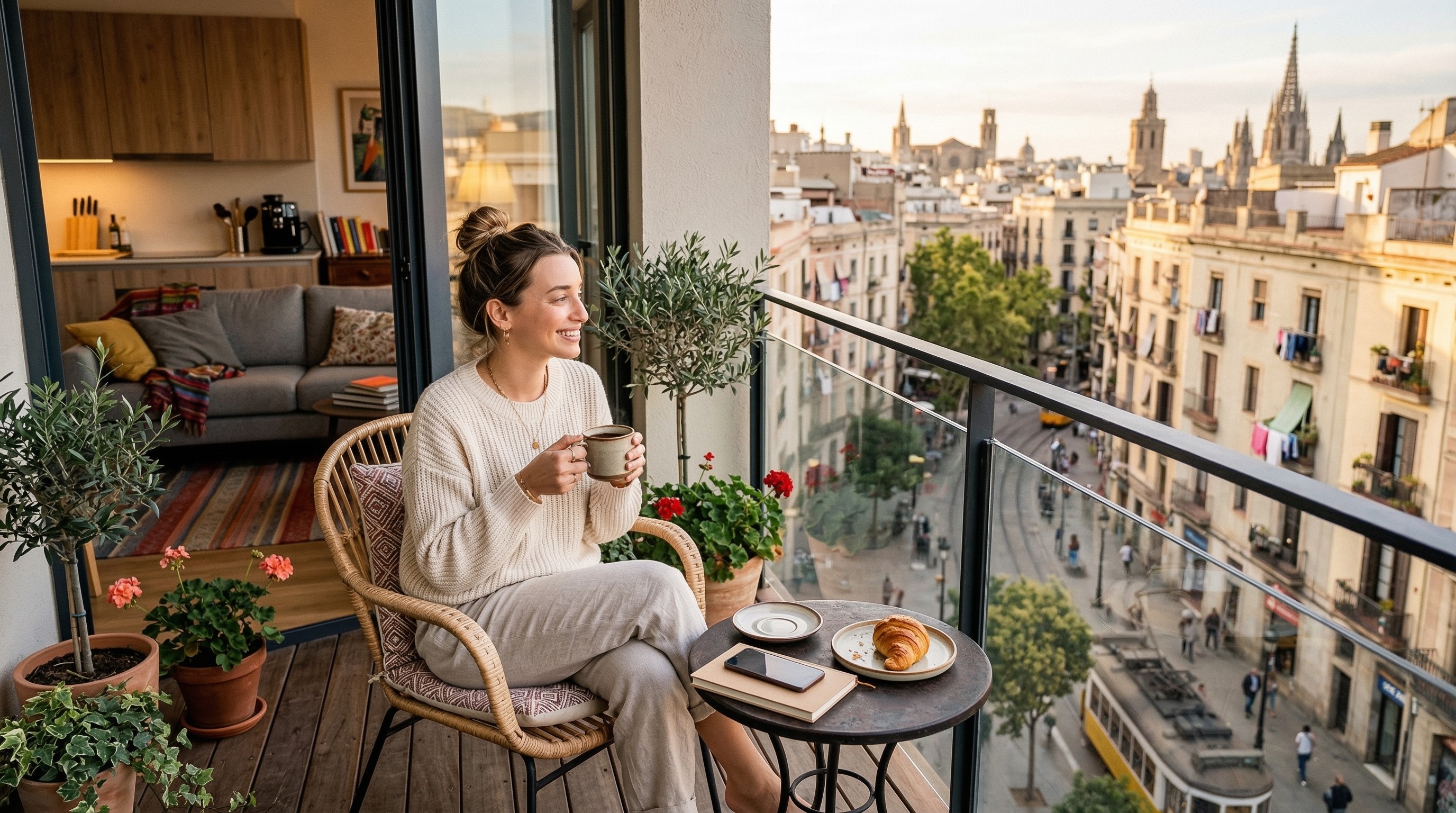
You wake up at whatever time suits you. There is no breakfast service ending at 10am. No queue at a buffet. No eggs that have been sitting under a heat lamp since 7:30am. No dining room full of strangers eating in companionable silence. You walk into your own kitchen, in whatever state of dress you choose, and you make exactly the breakfast you want. Your coffee, your way. Your toast, your timing. The news playing on the living room television if you want it, or complete quiet if you do not.
This sounds mundane because it is mundane. That is precisely the point.
The mundane morning routine is one of the most powerful anchors of personal comfort and psychological wellbeing that exists. When you travel, this anchor is typically lifted by the hotel environment, which replaces your personal morning with its institutional version. The fixed breakfast times, the shared space, the slight social performance of navigating a hotel dining room. It is fine. But it is not your morning. It is a hotel version of a morning, and over several days, the difference between the two accumulates into a feeling of slight dislocation that most travellers have learned to accept as an unavoidable cost of being away.
In a serviced apartment, your morning is your morning. The coffee is your brand, brewed in your way, drunk from a proper mug on a sofa in a living room that is genuinely yours for the duration of your stay. If that sounds like a small thing, wait until you experience it after three nights of hotel breakfast buffets. It will not feel small at all.
Guests who have made this discovery consistently report the morning routine as one of the things they most look forward to repeating on every subsequent serviced apartment stay. It is, in a word, restorative. And restoration is ultimately what accommodation is supposed to deliver.
Thing 2: The Sofa Revelation
The sofa. It seems almost too trivial to list as one of the things guests love most about serviced apartments. And yet, without exception, it comes up. Again and again, in reviews and in conversations, guests mention the sofa. Specifically, the existence of a sofa in a living room that is not the same room as the bed.
In a hotel room, there is nowhere to sit except the bed. Or occasionally, a desk chair that is technically available but not really designed for sitting in for any extended period of time. When you finish a day of meetings or sightseeing or event attendance and return to a hotel room, the bed is where you sit. Which means the bed is where you watch television. The bed is where you eat room service. The bed is where you make phone calls and answer emails and decompress and prepare for tomorrow. The bed is, in the absence of any alternative, everything.
The psychological consequence of this spatial collapse is more significant than most people consciously register.
When your bedroom is your entire living space, the brain's association between the bed and rest is constantly being undermined. You sleep in the place where you also work and eat and watch television, and over several nights, the quality of sleep in that bed gradually degrades because the brain no longer reliably receives the signal that this is a place of rest. It is a place of everything, which means it is a place of nothing specific.
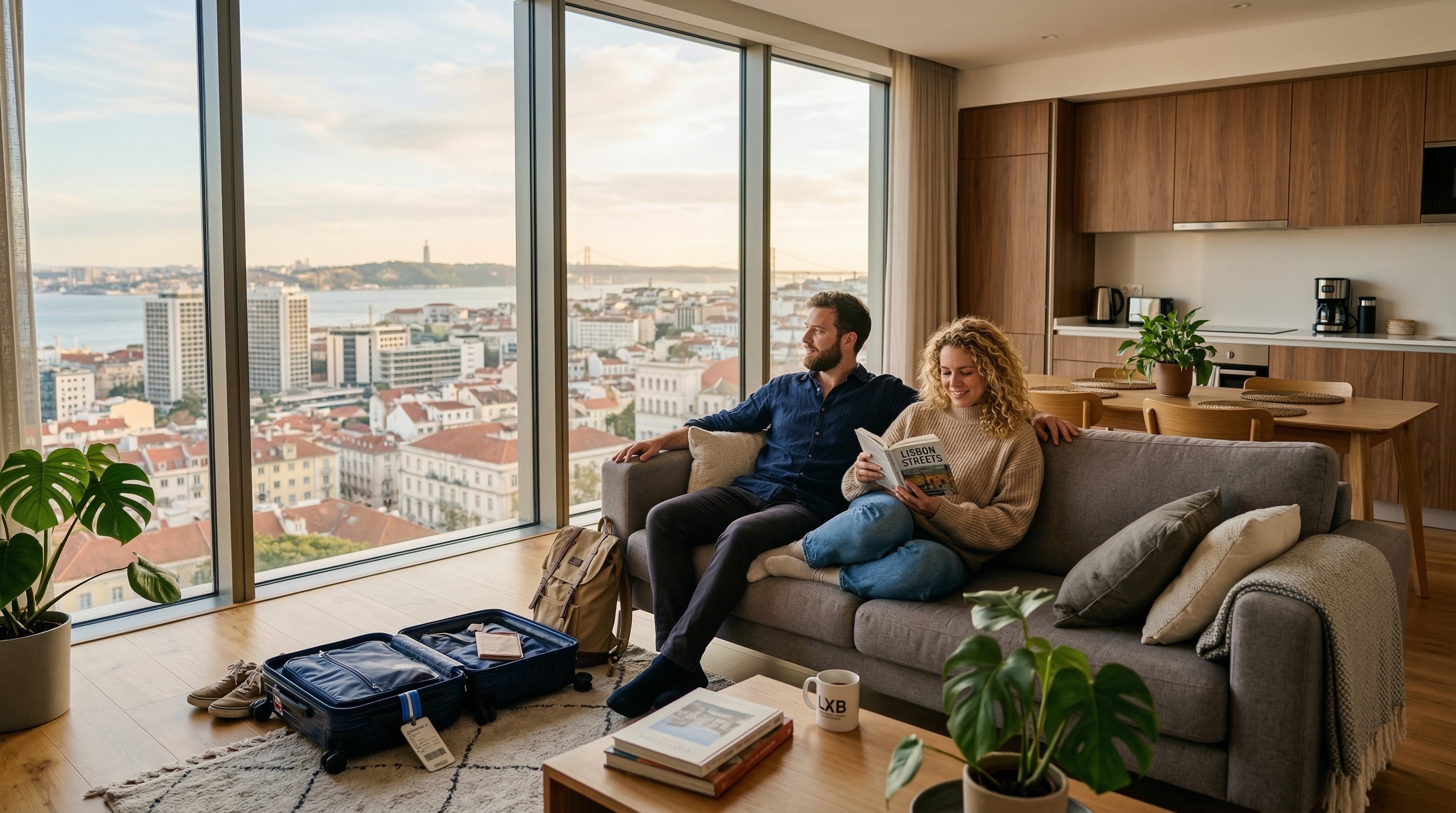
A serviced apartment separates these functions physically. The sofa is in the living room. The bed is in the bedroom. When you are on the sofa, you are relaxing. When you are in the bedroom, you are resting. These are different states, served by different spaces, and the brain responds to them differently. Sleep quality is better. Evenings are more genuinely restorative. And the whole texture of the stay feels more settled and more human.
Guests discover this on the first evening. By the second, they have rearranged their entire concept of what accommodation should provide. By the time they leave, they cannot quite imagine why they ever accepted the absence of a sofa as a normal feature of staying somewhere.
Thing 3: The Complete Disappearance of Food Anxiety
Here is something no hotel brochure will ever tell you about: food anxiety. The persistent, low-grade stress of every meal during a hotel stay. Where are we going to eat tonight? Is there anything decent nearby? Can I get room service without paying an amount that makes me slightly resent enjoying it? Is the hotel breakfast worth the price or should I find somewhere else? What time does everything close? What do I do if I get hungry at 11pm?
These are not dramatic concerns. But they are real, recurring, and cumulatively exhausting across a stay of several nights. Every meal becomes a small decision that needs to be made, a logistics problem that needs to be solved, a cost that needs to be justified. By day three of a hotel stay, even the most relaxed traveller has made a significant number of these small decisions and absorbed a significant number of food-related costs.
In a serviced apartment with a fully equipped kitchen, this entire category of anxiety simply disappears.
You shop on the day you arrive. Your fridge is stocked. Your storecupboard has what you need. Breakfast is solved. Lunch is in the kitchen. Dinner is partly at the brilliant restaurant you found nearby, and partly at home when you come back from the event or the late meeting and just want something simple without having to think too hard about it.
The freedom to choose, meal by meal, whether to cook or go out, based purely on what you feel like rather than on what is available or affordable or still open, is genuinely liberating. And the financial dimension is real too. Self-catering for breakfasts and occasional meals across a three-night stay can easily save £80 to £120 compared to the equivalent hotel food and drink spend, which is meaningful at every price point.
Guests who experience this for the first time describe a specific feeling of relaxation about the whole food dimension of their stay that they had not realised was missing from hotel visits. The disappearance of food anxiety is one of those quiet background improvements to the quality of a stay that guests only notice, and name, when it is absent in contrast to what they had before.
Thing 4: The Sound of Silence
Hotel buildings are acoustically complex environments. Hundreds of guests occupy a single building, moving through shared corridors, using shared lifts, making noise at all hours in adjacent rooms, and creating a constant ambient soundscape that permeates individual rooms with more penetration than most guests anticipate.
The late-night conversation in the corridor outside your room. The television in the room next door audible through a wall that is thinner than it looked in the photographs. The lift that operates directly opposite your room and announces every arrival and departure at whatever hour the building's population chooses to use it. These are not hypothetical hotel sounds. They are the consistent, documented, repeatedly reviewed reality of hotel acoustic environments.
Serviced apartments occupy residential buildings that are designed for people actually living there. The acoustic standards are different. The walls are built for real habitation rather than for maximum room density. There is no shared corridor outside your apartment because your apartment has its own front door that opens directly from a communal hallway rather than from a hotel corridor where other guests are constantly passing.
The result is meaningfully quieter nights. Guests who have made the switch from hotels to serviced apartments consistently report better sleep quality, and the acoustic environment is one of the primary contributors to this improvement. Fewer disturbances during the night means deeper, more restorative sleep. Better sleep means better days. Better days mean a better overall experience of the city and the purpose of the visit.
This is one of the things guests are not typically warned about in advance and that surprises them most noticeably on the first night. The quiet is not absolute. It is a city, after all. But it is the quiet of a home in a residential building rather than the ambient noise of a commercial hospitality operation, and the difference to sleep quality is both real and significant.
Thing 5: The Front Door Feeling
There is a specific psychological experience that comes with having your own front door during a city stay, and it is one that guests find difficult to articulate precisely but return to again and again in their descriptions of what they love about serviced apartments.
It is the feeling of genuine privacy. Of having crossed a threshold from the public world of the city into a genuinely private space that belongs to you and nobody else for the duration of your stay. Not a hotel room with a key card. Not a space within a building full of other temporary occupants, connected to all of them by shared corridors and shared lifts and shared lobbies. A front door. Your own entrance. A space that begins where the rest of the world ends.
This might sound melodramatic until you consider what its absence actually means.
In a hotel, you are never more than a corridor away from other guests. Your movements in and out of your room are potentially observed by anyone in that corridor. The lobby is a shared social space that requires a minimum of public presentability to navigate. Even in the privacy of your room, the ambient awareness that you are in a shared building with hundreds of other people is always present at some level.
A serviced apartment has none of this. You have your own entrance. Your own staircase or lift to your own floor. Your own front door. Inside, there is nobody. Just you, your space, and the specific quality of private peace that only a genuinely personal environment can provide.
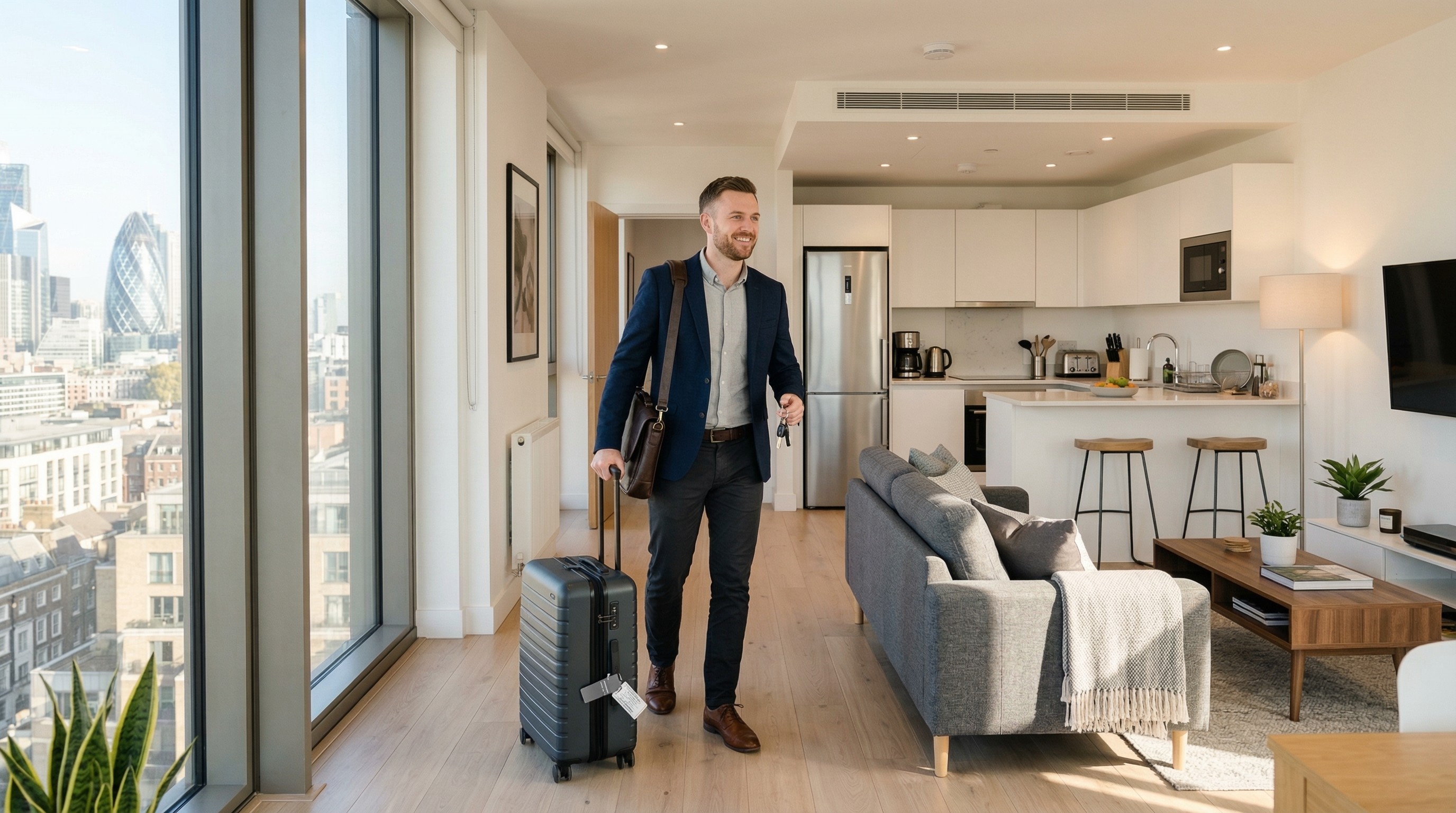
Guests discover this on arrival and it immediately shapes everything about how the stay feels. More relaxed. More genuinely at ease. More like being somewhere rather than being accommodated somewhere. It is a subtle but profound difference, and once you have experienced it, the hotel corridor and the shared lobby and the key card that activates your room's power feel like unnecessary intrusions on the simple human desire to feel at home.
Thing 6: The Laundry Liberation
This one generates genuine enthusiasm from guests who have experienced it, and it seems disproportionate until you understand the specific freedom it delivers.
Hotel laundry services are expensive, slow, and psychologically uncomfortable. Handing your clothing to a stranger in a hotel, paying a per-item charge that bears no relationship to the actual cost of washing a shirt, and waiting for its return is an interaction that most travellers find vaguely unpleasant. It is also genuinely costly. A full week's laundry through a hotel service can easily add £50 to £100 to a bill, and the experience of receiving freshly pressed items in a plastic bag is not exactly a pleasure.
The alternative in a hotel, if you want to avoid laundry charges, is to pack enough clothing for the full duration of your stay. For a week-long trip, this means a large suitcase. For a two-week trip, an even larger one. The packing burden of hotel-based travel is real and is largely dictated by the absence of laundry access.
A serviced apartment changes all of this completely.
There is a washing machine. It works the same way your washing machine at home works. You use it when you need to, with your own detergent if you have it or the standard product provided if you do not, and your laundry is done at zero additional cost within the time it takes the machine to run a cycle. For a two-week stay, you can pack a carry-on bag. For a month, you can pack a week's worth of clothes and wash them every few days.
Guests discover the laundry liberation and it immediately changes how they think about packing for future trips. The freedom to pack lighter, to not worry about running out of clean clothes, to simply use the machine whenever you need to, is both practically significant and psychologically disproportionately satisfying. It is one of those things that sounds trivial but that guests mention consistently as one of the features they value most.
Thing 7: The Neighbourhood Discovery Effect
This is perhaps the most unexpected of all the things guests love about serviced apartments, and it is one that requires a moment of explanation to fully appreciate.
When you stay in a hotel, you stay in a hotel area. Hotels cluster in commercial districts, near transport hubs, in the parts of a city that are convenient rather than characteristic. Your experience of the city you are visiting is shaped by the neighbourhood in which your hotel is located, and that neighbourhood is typically the one that looks most like every other hotel district in every other city you have ever visited.
Serviced apartments, by contrast, are distributed across residential and mixed-use neighbourhoods that have genuine local character. In Manchester, this means staying in Ancoats rather than a generic city centre hotel block. It means having the canal network outside your window in Castlefield rather than a conference centre car park. It means your morning walk taking you through the Northern Quarter's independent streets rather than a chain hotel's lobby.
The neighbourhood discovery effect is what happens when your accommodation is embedded in a real community rather than isolated in a commercial hospitality zone.
You find the coffee shop that the locals use. You discover the market that operates on a Saturday morning three streets away. You learn that the bakery on the corner sells something extraordinary at 8am and sells out by 9:30. You develop a passing familiarity with the neighbourhood that feels like the beginning of actually knowing a place rather than merely visiting it.
Guests who experience this describe a qualitatively different relationship with the cities they visit. They come back with stories about the neighbourhood rather than about the hotel. They feel like they actually saw the city rather than the tourist version of it. And they find themselves planning their next visit with a different kind of intention, wanting to go deeper into the city rather than just seeing its surface.
For a first-time Manchester visitor, this effect is particularly powerful. Manchester's neighbourhoods are genuinely extraordinary, each with a distinct character and community that rewards being in it rather than merely passing through it. A serviced apartment in Ancoats, Castlefield, or the Northern Quarter is a fundamentally different Manchester experience from any hotel in the city centre, and guests who make the comparison consistently choose the neighbourhood every time.
For more detail on the specific character of each Manchester neighbourhood and what staying there actually feels like, our guide to where to stay in Manchester for short stays provides the local context that helps guests choose the right neighbourhood for their specific trip.
Thing 8: The Group Dynamic Transformation
Groups of friends travelling together have a specific and consistent problem with hotels that nobody talks about in polite company. The problem is that you are spending a significant amount of money to be housed in separate rooms and then have to make plans to actually see each other.
You arrive at the hotel together. You check in together. And then you go to your separate rooms and the group dynamic that made the trip appealing in the first place effectively dissolves until you make specific arrangements to reconvene. The pre-dinner drinks happen in someone's small hotel room, perched awkwardly on available surfaces. The late-night debrief after the concert or the match involves a complex negotiation about whose room everyone is going to crowd into. The spontaneous card game or the extended conversation that continues naturally at home requires deliberate planning in a hotel because there is nowhere to have it.
A serviced apartment transforms this entirely.
A two or three-bedroom serviced apartment for a group of four or six people provides a shared living space in which the social dimension of travelling together is not just maintained but actively enhanced. The pre-event excitement happens in a living room where everyone has somewhere to sit and something to drink. The post-event wind-down continues naturally in the same space. The morning after is spent making breakfast together in a kitchen rather than individually navigating hotel dining rooms.
These shared spaces are where the memories of a group trip are actually made. Not in the event itself, though that matters too, but in the spaces around it. The conversation in the kitchen while someone makes coffee. The collective decision about what to do with the afternoon made from the comfort of a sofa rather than via a group text message. The sense of actually being together rather than merely being in the same city.
Groups who make this discovery do not book hotels for group trips again. The per-person cost of a well-chosen serviced apartment for a group is almost always lower than equivalent individual hotel rooms, and the quality of the shared experience it delivers is incomparably better. It is one of the clearest and most consistently reported wins of the serviced apartment model over the hotel default.
Thing 9: The Working Day That Actually Works
For the growing proportion of travellers who bring work on trips, whether that is a business visit, a remote working stay, or simply the reality of modern professional life that does not fully pause during leisure travel, the quality of the working environment within accommodation has become a genuine decision factor.
Hotel rooms offer a desk. Usually a small one, positioned as an afterthought in a corner of the room, paired with a chair that is technically usable for working but not designed for it. The broadband is shared with the rest of the building. The acoustic environment is the ambient noise of a hotel. And the workspace is in the same room as everything else, which means the transition between working and not working is entirely a matter of willpower rather than physical environment.
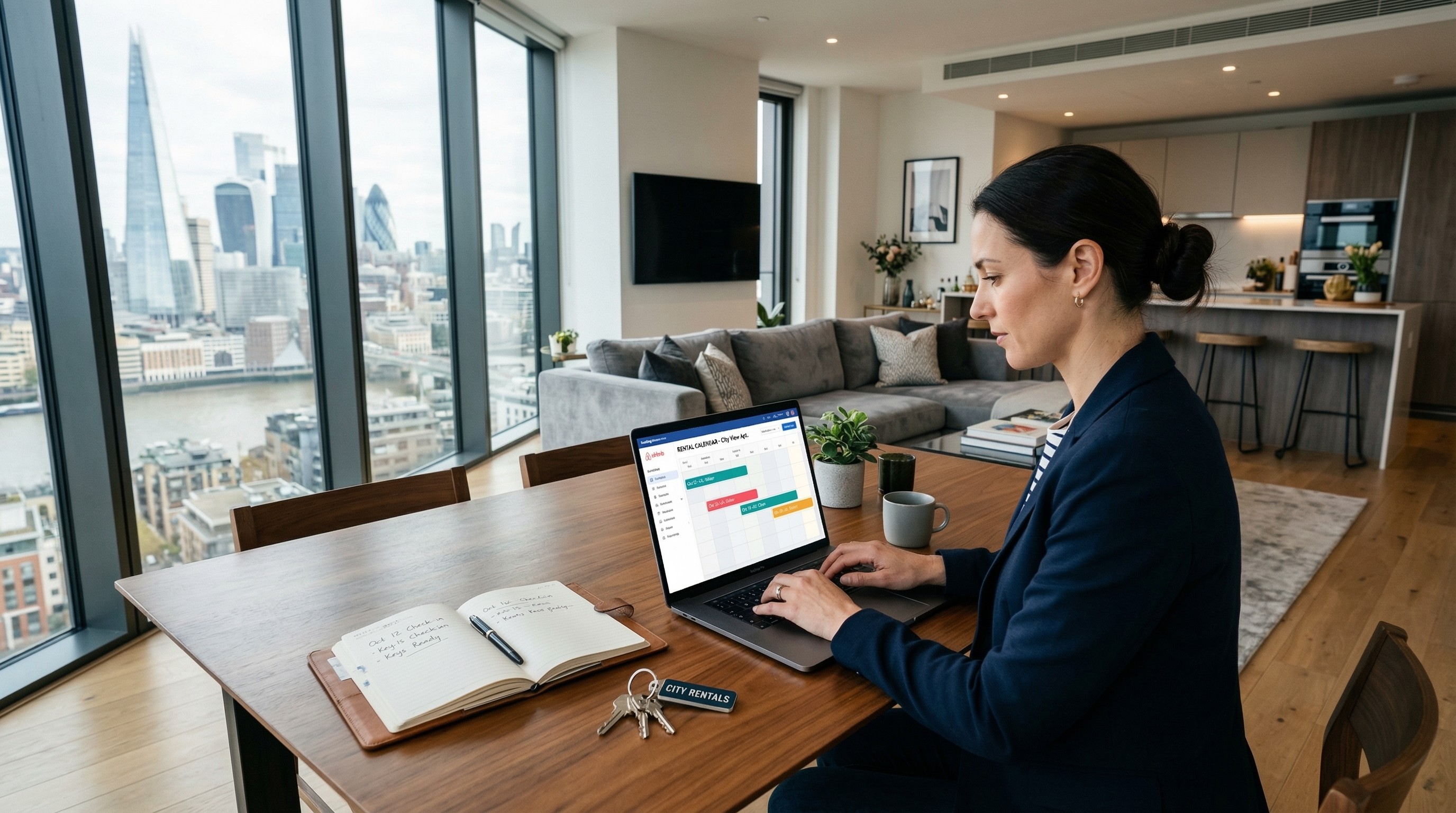
A quality serviced apartment offers a working environment that actually works. A proper desk, sized for the work being done. An ergonomic chair that supports sustained work sessions without causing the progressive discomfort that hotel desk chairs reliably deliver. Dedicated broadband that maintains consistent speeds regardless of building occupancy. An acoustic environment that supports concentration and professional video calls. And the physical separation between workspace and living space that allows working and not working to be genuinely distinct states rather than just two ways of sitting in the same room.
Guests who work during their stays report a dramatic difference in their professional output from a well-configured serviced apartment workspace compared to a hotel room desk. The quality of the calls is better. The quality of the concentration is better. The feeling of arriving at the evening having genuinely done good work rather than having managed a difficult working environment is better.
And when the working day ends, the workspace can be left behind. Not just metaphorically but literally. You move from the desk area to the sofa, from one clearly defined space to another, and the working day is genuinely over rather than merely suspended.
Thing 10: The Feeling of Being a Resident, Not a Tourist
This is the one that ties all the others together. The feeling, building through a serviced apartment stay, of being a resident of the city rather than a visitor to it.
It is a composite feeling made up of all the smaller experiences described above. The morning that is your morning. The neighbourhood that begins to feel familiar. The local coffee shop where your order is known by the third day. The canal walk that has become part of your daily rhythm. The kitchen that feels like your kitchen. The front door that feels like your front door. The sofa where you know exactly how to arrange yourself for an evening of genuine rest.
None of these elements alone creates the resident feeling. Together, they create something that most travellers have never experienced in a city they are visiting and did not know was available to them.
This feeling matters because it changes the quality of everything else about the trip.
When you feel like a resident rather than a tourist, you engage with a city differently. You explore with more confidence and less anxiety. You take the time to find the good coffee rather than accepting the nearest option. You walk rather than taxi because you know the streets. You feel comfortable enough to revisit the places you liked rather than feeling obligated to cover maximum new ground every day. You enjoy where you are, fully and genuinely, rather than performing the experience of enjoying it.
Guests who discover this feeling in a serviced apartment often describe it as what they have always wanted from travel but could never quite access through hotel stays. The hotel, however good, kept them on the visitor side of the experience. The serviced apartment moved them to the resident side, and from that side, the city they were visiting became a city they were inhabiting, however temporarily.
This is the secret that guests eventually tell about serviced apartments. Not the space or the kitchen or the cost, though all of those matter. But this. The feeling of being somewhere rather than just visiting it. Of travel that settles into experience rather than merely accumulating into itinerary. It is the best thing about serviced apartments and the hardest one to explain to anyone who has not yet experienced it.
Why These Things Matter More Than Guests Expect
Reading through the ten things above, a sceptical mind might object that several of them are small. A sofa. A washing machine. A quiet night. A kitchen for breakfast. These are not dramatic features. They are the basic infrastructure of normal domestic life.
And that is precisely the point.
The reason these things matter so much, the reason guests love them so consistently and return for them so reliably, is that they are the basic infrastructure of normal domestic life. When you travel, particularly for any extended period, the absence of this infrastructure is not a minor inconvenience. It is a fundamental disruption of the patterns and environments that support human functioning and wellbeing.
The serviced apartment restores this infrastructure. It does not add luxury. It does not add theatre. It simply provides the conditions that allow a person to function, rest, eat, work, and be in a new city the same way they would function, rest, eat, work, and be at home. And the effect of this restoration, particularly over stays of more than a couple of nights, is profound.
Smart guests have worked this out. They are not choosing serviced apartments because they are glamorous. They are choosing them because they are genuinely good for the quality of their time away from home in ways that hotels, for all their polish and amenity, are not structured to deliver.
What Separates a Genuinely Great Serviced Apartment from a Mediocre One
The experiences described in this guide are not automatic. They are delivered consistently only by well-managed, well-appointed serviced apartments in the hands of professional operators who understand what guests actually need and commit to providing it.
A serviced apartment with unreliable broadband does not deliver the working day that actually works. A serviced apartment with a poorly equipped kitchen does not deliver the freedom from food anxiety. A serviced apartment managed carelessly, where the sofa is uncomfortable and the washing machine is temperamental and the check-in process is confused, does not deliver any of the quiet magic described above. It delivers frustration dressed up in the language of home-like comfort.
The differentiators between genuinely great serviced apartments and merely adequate ones:
Professional management with a responsive, knowledgeable team available throughout the stay. Honest, accurate representation of the property in its listing photography and descriptions. Consistent quality standards maintained across every stay, not just on arrival. Properly equipped kitchens with the full range of equipment guests actually need. Broadband that is dedicated, fast, and reliable. Furniture selected for genuine comfort rather than for photographic appeal. Bedrooms configured for real sleep quality. And management that proactively maintains the property rather than waiting for guests to report problems.
These are the standards that determine whether a serviced apartment delivers the ten experiences described in this guide or falls short of them. And they are standards that can only be reliably guaranteed by booking through a professional management company with a track record of consistent delivery.
Our detailed guide on what is a serviced apartment and is it right for your stay covers the full evaluation framework for assessing any serviced apartment before booking, including the specific questions to ask and the red flags to watch for.
Manchester: The City Where These Benefits Shine Brightest
Every one of the ten things described in this guide is available in serviced apartments in cities across the UK and beyond. But Manchester is a city where they combine with particular power, because Manchester is a city that rewards the resident experience more than almost anywhere else in the country.
The neighbourhood discovery effect is extraordinary here, because Manchester's neighbourhoods are extraordinary. Ancoats delivers the world-class food and coffee scene that turns a morning routine into a daily highlight. Castlefield delivers the canal-side beauty that makes evening walks genuinely restorative. The Northern Quarter delivers the independent, characterful streets that give the neighbourhood discovery effect its richest expression. Didsbury delivers the village community feel that makes extended stays feel like genuinely living somewhere.
The group dynamic transformation is particularly powerful in Manchester because there is so much to experience together. A match at Old Trafford or the Etihad. A concert at the AO Arena. A dinner in Ancoats that becomes a story worth telling. A morning at Mackie Mayor that extends into an afternoon of exploring. A serviced apartment provides the home base from which all of these shared experiences radiate and to which they return, and Manchester provides the experiences worth having.
The feeling of being a resident rather than a tourist is most fully realised in a city that has genuine neighbourhood life to inhabit, and Manchester has this in abundance. Its communities are real, its independent businesses are thriving, its streets have personality, and its people are genuinely welcoming to anyone who shows up ready to engage with the city on its own terms.
For a city that delivers all of this, the accommodation that allows you to inhabit it properly, that makes you a resident rather than a tourist, is not a luxury. It is the essential foundation of the best possible Manchester experience.
How Beyond Stays Delivers Every One of These Experiences
The ten things guests love about serviced apartments do not materialise by accident. They are delivered by professional operators who understand what genuine quality means, who select and manage properties to consistently high standards, and who take genuine pride in the guest experience they create.
Beyond Stays Group has built its entire operation around delivering precisely these experiences to every guest who stays in one of their Manchester properties. Not the theoretical version of these experiences that any serviced apartment listing can describe, but the actual, lived, felt version that guests come back for.
The kitchens in Beyond Stays properties are genuinely fully equipped, because the team knows that the freedom from food anxiety depends on having the right equipment when you need it. The broadband is confirmed and tested, because the working day that actually works requires connectivity that does not disappoint. The sofas are genuinely comfortable, because the sofa revelation only happens if the sofa is worth sitting on. The properties are in real neighbourhoods with real local character, because the neighbourhood discovery effect requires an actual neighbourhood rather than a hotel district.
And behind all of this is a professional management team that maintains every property to a consistent standard, responds promptly when anything needs attention, and is genuinely invested in ensuring that every guest leaves with the feeling of having stayed somewhere genuinely excellent rather than merely adequate.
The ten things guests secretly love about serviced apartments are not secrets to the Beyond Stays team. They are the foundation of every decision about how properties are selected, furnished, managed, and presented. They are the reason guests come back, and they are the reason landlords trust Beyond Stays with their properties.
Whether you are planning your first Manchester stay and want to understand what all the enthusiasm about serviced apartments is actually about, or you are a returning visitor who has already made the discovery and wants to find the best serviced apartment options across Manchester's finest neighbourhoods, Beyond Stays is the place to start.
Ready to discover all ten of these things for yourself on your next Manchester stay? Book a call with the Beyond Stays team today. Tell them what kind of trip you are planning, what matters most to you in your accommodation, and how long you are staying, and they will match you with a property that delivers every one of these experiences from the moment you walk through the door. Because the best way to understand why guests love serviced apartments is simply to stay in an excellent one. And excellent is what Beyond Stays does.
FAQs: Things Guests Love About Serviced Apartments
1. Is the quality of sleep really better in a serviced apartment than a hotel?
Yes, consistently and for several specific reasons. Serviced apartments in residential buildings have meaningfully better acoustic environments than hotels, with fewer ambient noise sources from shared corridors, adjacent guest rooms, and building-wide systems. The bedroom in a serviced apartment is a dedicated sleeping environment rather than a multipurpose room, which supports better sleep psychology. And the ability to properly control the room environment, temperature, light, and noise, in a self-contained apartment is greater than in a hotel room operating within a building-wide management system. Guests consistently report better sleep quality as one of the most noticed improvements after switching from hotels to serviced apartments.
2. Do I really save money by self-catering in a serviced apartment?
Yes, substantially for stays of two nights or more. Breakfast prepared in a serviced apartment kitchen costs a fraction of the hotel breakfast price. Lunches and dinners prepared at home or partially self-catered represent significant savings against the full restaurant and room service costs of a hotel stay. For a three-night stay for two people, realistic self-catering savings typically range from £80 to £150 compared to equivalent hotel food and drink expenditure. For a week-long stay, the saving can exceed £300. These are conservative estimates that assume regular eating out for at least some meals. The saving grows proportionally with the length of stay.
3. Are serviced apartments in Manchester located in interesting neighbourhoods or are they just in commercial areas like hotels?
Serviced apartments in Manchester are available across a wide range of the city's most interesting and characterful neighbourhoods, including Ancoats, Castlefield, the Northern Quarter, Deansgate, Spinningfields, Salford Quays, and Didsbury. This neighbourhood diversity is one of the most significant advantages of the serviced apartment model over hotels, which cluster predominantly in commercial city centre zones. Staying in a real neighbourhood gives guests access to local character, community, independent businesses, and everyday life that commercial hotel districts cannot provide. Beyond Stays specifically curates properties in Manchester's best neighbourhoods to deliver precisely this neighbourhood experience.
4. Are serviced apartments suitable for groups of friends visiting Manchester together?
Absolutely, and for groups of four or more people, a multi-bedroom serviced apartment is almost always a better choice than individual hotel rooms on both a cost and experience basis. The per-person cost of a well-chosen two or three-bedroom serviced apartment is typically lower than equivalent individual hotel rooms, while delivering a shared living space in which the social dimension of the group trip is fully supported. The group dynamic transformation described in this guide, the pre-event build-up, the shared morning, the extended conversation that continues naturally in a shared living room, is one of the most consistently valued benefits of serviced apartment stays for groups.
5. How do I find a serviced apartment in Manchester that genuinely delivers all these benefits rather than just promising them?
Book through a professional management company with a proven track record in the Manchester market, verified guest reviews, transparent pricing, and a responsive communication style. The quality of the management operation behind a serviced apartment determines whether the experiences described in this guide are actually delivered or merely described. Beyond Stays combines all the qualities of professional management excellence with deep local knowledge of Manchester's neighbourhoods, making them the most reliable starting point for guests who want to discover what genuinely excellent serviced apartment living in Manchester actually feels like.